
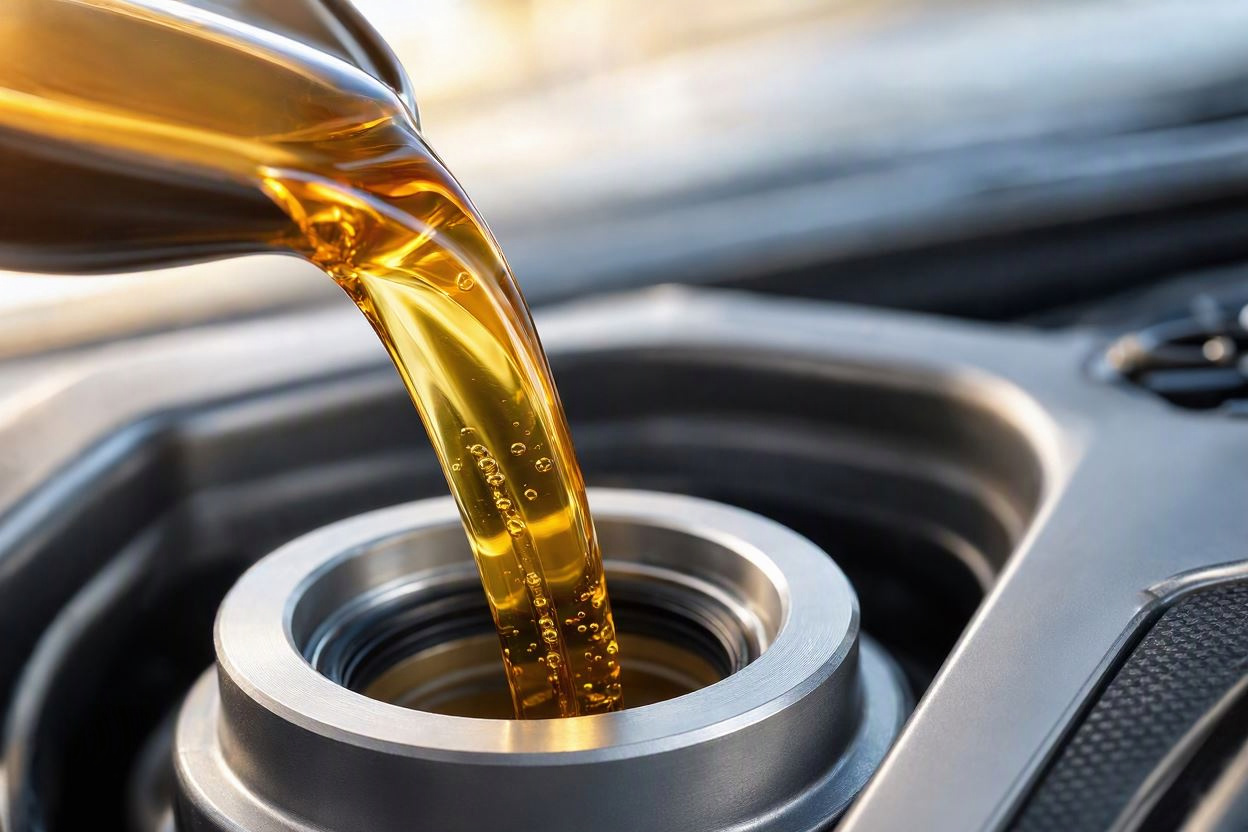
Pulling into an express drive-thru lube lane often ends with the same familiar scenario: the technician walks up to your driver-side window, tablet in hand, and delivers the pitch: "Your vehicle manufacturer recommends a full synthetic blend or premium full synthetic today—should we get that running?" Glancing at the service menu on the wall, you watch the baseline quote jump from $49.99 for conventional oil up to $95 or even $115 for full synthetic fluid. Here at OilChangeHack, our nationwide bay price tracking shows this fluid upgrade is where quick-lube chains generate their highest profit margins. But inside modern engines, motor oil is no longer just a passive lubricant—it acts as hydraulic fluid, internal coolant, and the only barrier standing between your engine and a catastrophic mechanical failure.
The Molecular Reality: Crude Petroleum vs. Laboratory Synthesis
To understand why synthetic oil carries a higher price tag, you have to look at what happens at the molecular level. Conventional motor oil is refined directly from crude oil pumped out of the ground. Despite heavy industrial distillation, solvent refining, and chemical hydrotreating, conventional base oils retain uneven molecular geometries, varying hydrocarbon chain lengths, residual sulfur compounds, and trace paraffin waxes.
Under a microscope, conventional oil molecules look like a random assortment of marbles, golf balls, and jagged rocks. In a mild operating environment—such as cruising at moderate highway speeds on an overcast 65°F (18°C) day—these uneven molecules slide past each other reasonably well. However, when subjected to extreme shear forces inside a high-revving valvetrain or between piston rings and cylinder walls, these fragile, irregular molecules break down quickly. The fluid shears out of grade, losing its protective cushion and exposing bare metal to friction wear.
Full synthetic lubricants (primarily API Group III severely hydrocracked oils, Group IV Polyalphaolefins (PAO), and Group V synthetic esters) are synthesized from uniform chemical building blocks in tightly controlled laboratory environments. Every molecule inside a jug of premium synthetic oil is identical in size, length, and tensile strength. This structural consistency provides three decisive mechanical advantages that conventional mineral oil cannot match:
- Superior Shear Resistance: Uniform synthetic molecules maintain their designated viscosity grade under punishing mechanical stress, preventing hydrodynamic oil film collapse at high engine RPMs.
- Zero Paraffinic Wax Content: Because synthetic base stocks are synthesized rather than distilled from crude oil, they contain zero naturally occurring waxes, meaning they do not solidify into thick grease in sub-zero winter temperatures.
- High Flash Point and Oxidation Resistance: Synthetic lubricants resist thermal breakdown up to temperatures exceeding 450°F (232°C). In contrast, conventional mineral oils begin oxidizing, evaporating, and forming carbon lacquer around 300°F (149°C).
Why Modern Turbocharged Engines (TGDI) Demand Synthetic Fluid
If your vehicle was manufactured within the last decade, there is an overwhelming probability that it runs on a Turbocharged Gasoline Direct Injection (TGDI) powertrain. Automakers downsized displacement across the board—replacing naturally aspirated V6 and V8 platforms with 1.5L, 2.0L, and 2.7L turbocharged 4-cylinder and 6-cylinder engines to comply with strict federal emissions and CAFE fuel economy targets.
Turbochargers rely exclusively on engine motor oil for bearing cooling and lubrication. The central turbo turbine shaft spins at speeds between 150,000 and 250,000 RPM while operating mere inches from exhaust gases exceeding 1,600°F (870°C). When you turn off your ignition after highway driving, the engine stops and oil circulation halts immediately. Any conventional mineral oil resting in the turbo feed lines boils against the scorching metal, baking into rock-hard carbon deposits known as "turbo coking." Over thousands of miles, this carbon restricts oil passages, starves the turbo shaft of lubrication, and triggers total turbocharger failure—a repair bill that typically runs anywhere from $1,800 to $3,500.
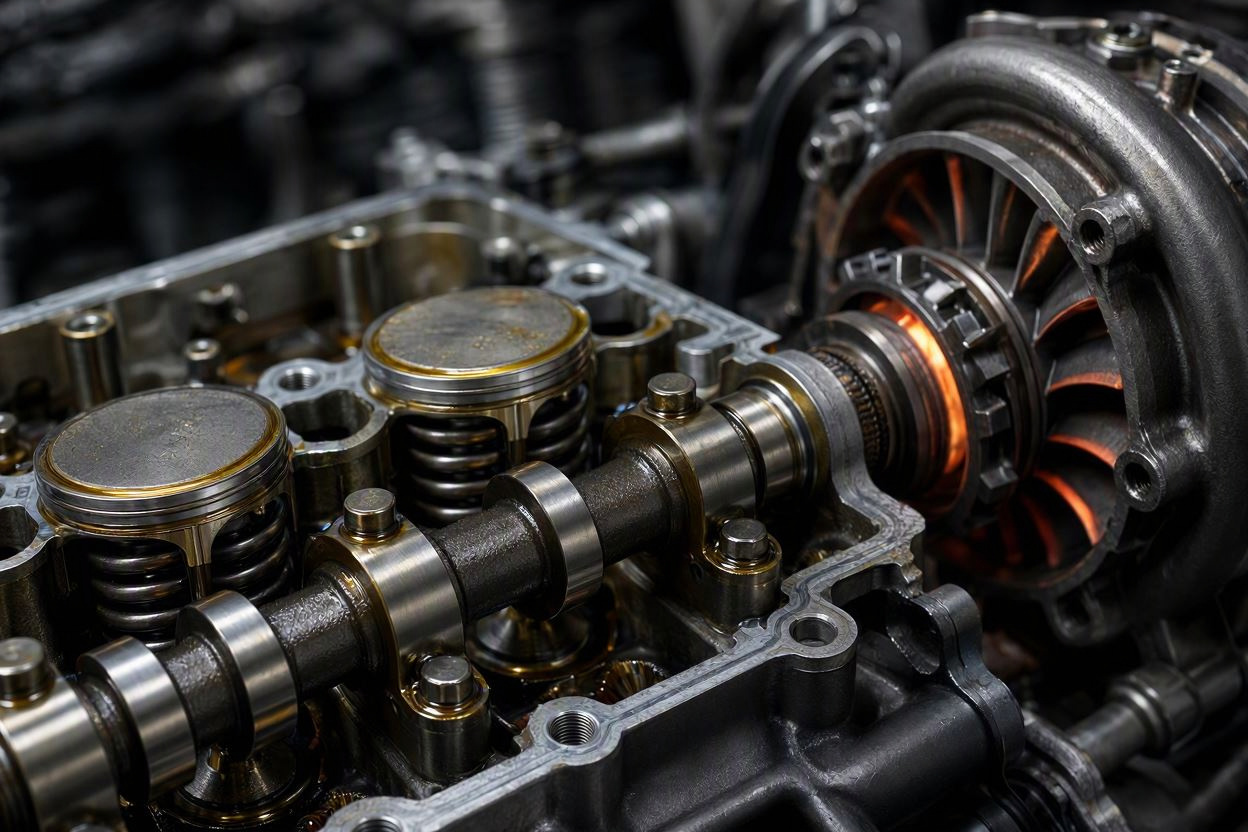
Furthermore, TGDI engines face a phenomenon called Low-Speed Pre-Ignition (LSPI). This occurs when droplets of fuel and engine oil ignite spontaneously in the combustion chamber before the spark plug fires, causing extreme cylinder pressure spikes that crack ring lands, bend connecting rods, and shatter pistons. Modern synthetic lubricants are engineered with targeted detergent packs specifically formulated to suppress LSPI events. Before picking an oil off the shelf, understanding modern API SP and Dexos oil specs ensures your powertrain gets the precise additive balance required by your manufacturer.
Planning routine maintenance instead of costly repairs?
Don't pay full retail counter prices at the bay. Browse our verified database of printable oil change coupons from top chains like Valvoline, Take 5, and Jiffy Lube to save up to $25 instantly.
Find Local Coupons →Cold Starts: Where 75% of Lifetime Engine Wear Occurs
Most motorists assume engine wear happens while towing heavy trailers, accelerating uphill, or driving at sustained 80 mph speeds. Tribological research proves the opposite: roughly 75% of cumulative internal engine wear occurs during the initial 30 to 60 seconds after a cold start.
When an engine sits parked overnight, gravity slowly drains standing oil back into the oil pan, leaving cylinder walls, valve lifters, and camshaft lobes coated in only a microscopic boundary film. On freezing mornings, conventional 10W-30 or 5W-30 mineral oil thickens significantly, flowing with the sluggish consistency of cold honey. It takes significant oil pump pressure and up to a minute of cranking and idling to force that heavy oil through narrow block passages and up into the cylinder head.
Modern ultra-low viscosity synthetic formulations—including 0W-16, 0W-20, and the latest 0W-8 factory fills—remain fluid and pump freely even at -35°F (-37°C). The "0W" winter rating ensures that hydraulic valve lifters, timing chain tensioners, and variable valve timing (VVT) phasers receive immediate oil pressure within a fraction of a second, preventing the dry rattling and metal scouring that permanently damages valvetrain components. If you regularly face freezing morning commutes, our full guide on preventing sub-zero dry starts and engine damage covers winter fluid viscosity in detail.
The Maintenance Math: Does Synthetic Actually Cost More?
Sticker shock at the quick-lube counter often obscures the actual annual cost of vehicle ownership. Conventional oil breaks down rapidly under heat, oxidation, and normal fuel dilution, requiring a strict 3,000-mile or 3-month drain interval to prevent crankcase sludge accumulation. Full synthetic oil, fortified with resilient Total Base Number (TBN) additive packages that neutralize acidic blow-by gases, reliably handles 7,500-mile to 10,000-mile service intervals (or whatever your dashboard Oil Life Monitoring System indicates).
Here is how the real annual math breaks down for a typical driver covering 15,000 miles per year:
- Conventional Maintenance: 15,000 miles ÷ 3,000-mile intervals = 5 shop visits annually. At a conservative $50 per visit, your annual fluid expenditure is $250, accompanied by 5 separate trips and roughly 2.5 hours sitting in service waiting areas.
- Full Synthetic Maintenance: 15,000 miles ÷ 7,500-mile intervals = 2 shop visits annually. Even at a retail counter price of $95 per service, your annual total is $190, requiring only 2 quick stops and cutting your garage downtime by more than half.
Far from costing more, full synthetic oil saves direct out-of-pocket cash each year while providing superior protection to your engine's internal tolerances.

How to Skip the Drive-Thru Surcharge
The only real downside to full synthetic fluid is the inflated walk-in pricing posted on express service menus. Drive-thru quick-lube chains run high overhead on real estate and labor, making up their margins on premium fluids and add-on filter sales. Fortunately, the aggressive competition between national service franchises means substantial manufacturer discounts are readily accessible online.
Before pulling into the bay, smart drivers can pull up an active valvoline coupon $25 synthetic oil change directly on their smartphone. Applying an instant digital barcode at the bay window knocks synthetic package pricing down into conventional territory, allowing you to upgrade your motor oil without absorbing retail markup.
Just remember the standard 5-quart allowance: most printable vouchers and promotional packages cover up to five quarts of motor oil and a standard spin-on filter. If your vehicle is a full-size truck, V8 SUV, or German performance sedan with a 6- to 8-quart oil pan or a specialized cartridge filter, expect minor per-quart fluid adjustments on the final invoice. Understanding how hidden quick-lube fees and shop supply charges are calculated prevents unexpected invoice jumps at the counter.
When Is Conventional Oil Still Acceptable?
Is there any situation where conventional or semi-synthetic blend oil remains the better choice? Yes, in two specific automotive edge cases:
- Vintage Engines and Flat-Tappet Classic Cars: Pre-1990 classic vehicles engineered with loose mechanical clearances and flat-tappet camshafts benefit from high-zinc (ZDDP) conventional formulations that cushion high-friction lifters.
- Older Powertrains with Pre-Existing Oil Leaks: Synthetic oil does not ruin or eat away rubber seals. However, because synthetic molecules are remarkably uniform and detergent-rich, switching an older, sludge-filled engine to synthetic will wash away baked sludge deposits that were physically plugging cracked valve cover gaskets or main seals, exposing leaks that were already there.
The Final Verdict
For any modern passenger vehicle, crossover, or pickup truck, full synthetic motor oil is not an optional extravagance—it is fundamental engine insurance. The thermal demands of turbochargers, the precision tolerances of variable valve timing systems, and the friction of cold-weather starts make conventional petroleum obsolete for modern engines. When paired with extended drain intervals and verified digital coupons, synthetic oil delivers superior engine longevity at a lower overall annual cost.