
You turn the ignition key on a freezing January morning, and your engine stumbles through several agonizing, slow rotations before coughing to life with a dry metallic rattle. That harsh grinding noise isn't just the winter cold—it is the sound of critical valvetrain components starving for lubrication. Cold dry starts account for up to 75% of long-term engine wear. When sub-zero temperatures hit, conventional motor oil congeals into a thick, honey-like consistency that takes upwards of 45 seconds to reach overhead cams and turbocharger bearings. Planning a seasonal visit using verified oil change coupons before winter settles in is the single easiest hack to avoid blown seals, fried starters, and massive repair bills.
Most drivers wait until their dashboard sticker expires or search for cheap oil change coupons only after a warning light flashes on an icy morning. But running degraded, moisture-contaminated oil through sub-zero blizzards is a major financial risk. In this comprehensive guide, we explain the mechanics of cold kinematic viscosity, break down the actual cost of winter freeze damage, dismantle deceptive bay upsells, and reveal how to use an active synthetic oil change coupon to lock in premium protection for the lowest out-of-door price.

Cold Viscosity Decoded: The Real Reason You Need a Winter Oil Change
Check any bottle at an auto parts shelf or the digital display at an express lube bay, and you will see multigrade ratings like 0W-20, 5W-30, or 10W-40. A remarkably common driver misconception is that the "W" stands for "weight." Under SAE standard J300, the "W" stands specifically for Winter.
- The Number Before the "W" (Cold Flow Rating): Evaluates flow resistance at arctic temperatures down to -35°C (-31°F). The lower the number, the faster the oil behaves like a liquid rather than thick grease during a frozen morning crank.
- The Number After the "W" (Operating Viscosity): Measures fluid stability at a sustained engine temperature of 100°C (212°F).
The practical difference between grades is dramatic. While a vehicle running thick conventional oil may suffer metal-on-metal friction for almost a minute during extreme chills, a modern 0W or 5W full-synthetic blend pressurizes throughout the entire crankcase in under 4 seconds. Drive-thru chains like Take 5 Oil Change carry dedicated low-viscosity bulk lines suited for instant cold starts. Finding an eligible coupon for synthetic oil change lets you upgrade your cold-weather grade for practically the same price as budget conventional fluid.

The Cost Breakdown: A $70 Discount Service vs. $1,800+ Freeze Repairs
Skipping routine maintenance before severe weather arrives usually leads to a compounding series of mechanical failures. Here is what happens under your hood when congealed oil meets freezing temperatures:
| Component at Risk | Winter Failure Mechanism | Average Repair Cost |
|---|---|---|
| Starter Motor & Alternator | Turning an engine over against frozen, thick fluid doubles battery amperage draw, burning out starter windings rapidly. | $550 – $950 |
| Variable Valve Timing (VVT) Solenoids | Microscopic screen filters (0.2mm) choke on sludge, throwing timing trouble codes and triggering limp mode. | $400 – $800 |
| Turbocharger Journal Bearings | Turbines spin up to 150,000 RPM instantly. Delayed cold-oil feed lines cause catastrophic journal scoring in seconds. | $1,600 – $2,800 |
| Crankcase PCV System (Frozen Emulsion) | Combustion moisture freezes inside PCV vent lines, creating intense pressure that ruptures main crankshaft seals. | $850 – $1,500 |
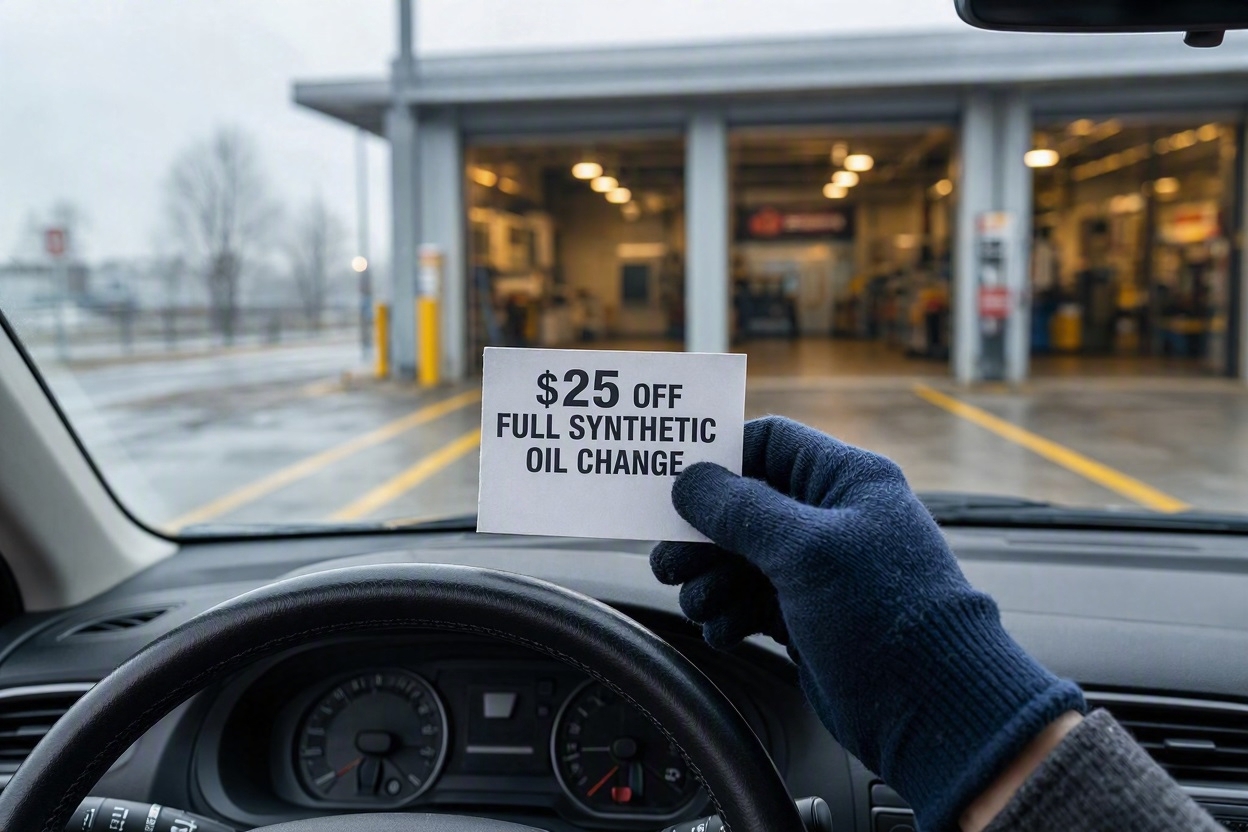
When you look at the real math, routine car care is simply cheap insurance. Booking an appointment with reliable oil change coupons near me brings your total bill down to $65–$85 for premium synthetic fluid. Waiting until a starter burns out or an alternator shorts out will leave you stuck paying steep diagnostic and labor rates at general mechanical repair chains like Firestone Complete Auto Care.
Short Winter Trips: Why Your Oil Fills with Acidic Water
Few drivers realize that everyday winter driving habits severely degrade oil additives. In sub-zero weather, combustion gases escape past piston rings into the crankcase. This "blow-by" contains raw hydrocarbons, sulfur oxides, and substantial vaporized water. For every single gallon of gasoline burned, an engine produces roughly one gallon of water vapor.
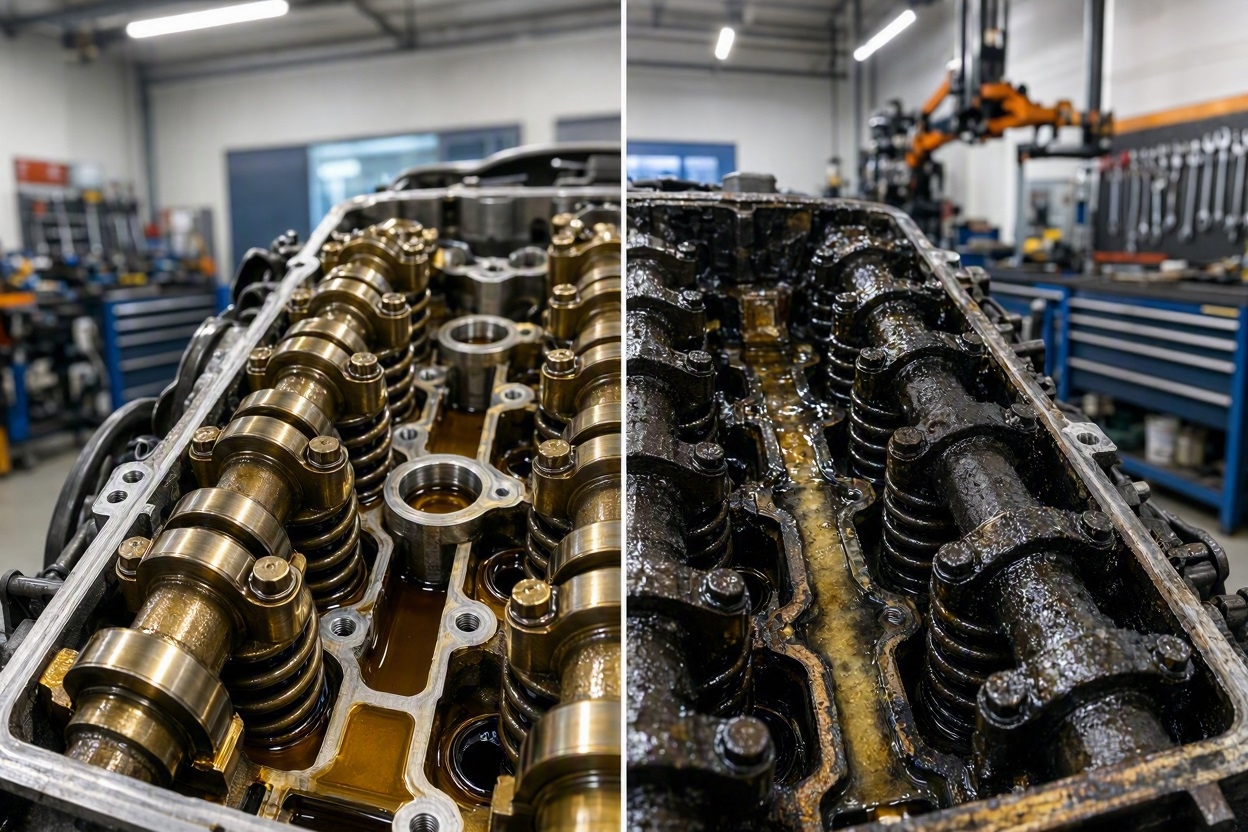
During warm summer highway cruising, your engine oil quickly heats above 200°F (93°C), boiling off this condensation through the PCV valve harmlessly. But during typical winter commutes—running five minutes down the road to pick up groceries or drop children off at school—the crankcase never reaches sustained operating temperature. The unevaporated moisture churns into degraded motor oil, generating a yellowish, mayonnaise-like emulsion under your oil cap and forming caustic sulfuric acid that eats into copper-lead rod bearings.
Fresh synthetic oil contains robust, unexhausted detergent and dispersant packages designed to neutralize acidic blow-by and suspend moisture droplets safely until your next highway run. Old, depleted summer oil cannot cope, resulting in aggressive sludge deposits that permanently choke oil passages.
Bay Traps: 4 Seasonal Quick-Lube Upsells to Decline Immediately
Lube technicians know that winter brings genuine mechanical worries, which makes drivers more susceptible to high-pressure suggestions. When pulling in with a discounted voucher at chains like Jiffy Lube, make sure you decline these four overpriced cold-weather add-ons:
- The $75 "Winter Engine Flush": Harsh chemical flushes can dislodge chunks of engine varnish that migrate straight down into the oil pickup screen, choking your oil pump. Quality modern synthetic oils already feature powerful detergency packages that clean gradually and safely.
- $60 Quick-Lube Winter Wipers: Service bays routinely slap a 200% markup on standard winter wiper blades. Pick up high-grade silicone blades from an auto parts retailer or big-box store for $20 to $25 and clip them on yourself in less than two minutes.
- Premature Coolant Flushes ($140+): Long-life OAT coolants often last up to 100,000 miles. Don't buy a flush based on eye tests alone unless an optical refractometer shows your freeze point has slipped above -20°F. If you actually need cooling or suspension work, dedicated repair chains like Midas routinely offer packaged service deals with far better value.
- $50 Cabin Air Filters: Technicians love pulling a slightly dirty filter out to shock customers. A replacement filter costs $12 to $15 online and snaps into the glovebox slot without any tools required.
The Smart Driver's Winter Oil Change Checklist
To maximize cold-weather engine protection while keeping your routine maintenance costs minimal, follow these practical steps:
- Verify Cold Climate Viscosity in Your Manual: Open your glovebox and consult the engine oil chart. Many modern vehicles that recommend 5W-20 under standard driving conditions explicitly authorize or recommend 0W-20 for sub-freezing winter weather.
- Insist on Full Synthetic: Blended formulas may contain as little as 15% synthetic stock, meaning the remaining conventional oil can still thicken in freezing climates. Using an oil change promo code for 100% full synthetic keeps your fluid flowing freely down to -40°F.
- Watch the 5-Quart Rule: Most standard promotional vouchers cover up to 5 quarts of oil. If you drive an SUV, truck, or European model requiring 6 to 8 quarts, factor in the shop's per-quart surcharge before service begins.
- Verify the Dipstick Before Driving Off: Stiff pneumatic lines and cold dispensing valves in winter bays can occasionally lead to meter errors. Pull the dipstick yourself right after the service to ensure the fluid sits squarely between the fill indicators.

Lock In Verified Winter Deals Today
Harsh winter conditions are tough on mechanical parts, but proactive car care keeps expensive breakdowns off your schedule. Equipping your vehicle with fast-flowing synthetic oil ensures rapid startup lubrication and protects critical engine components throughout the freeze.
Never pay full retail price at the counter. Browse our latest database, grab a verified Valvoline oil change coupon, and enjoy reliable cold-morning starts all winter long without breaking your budget.