
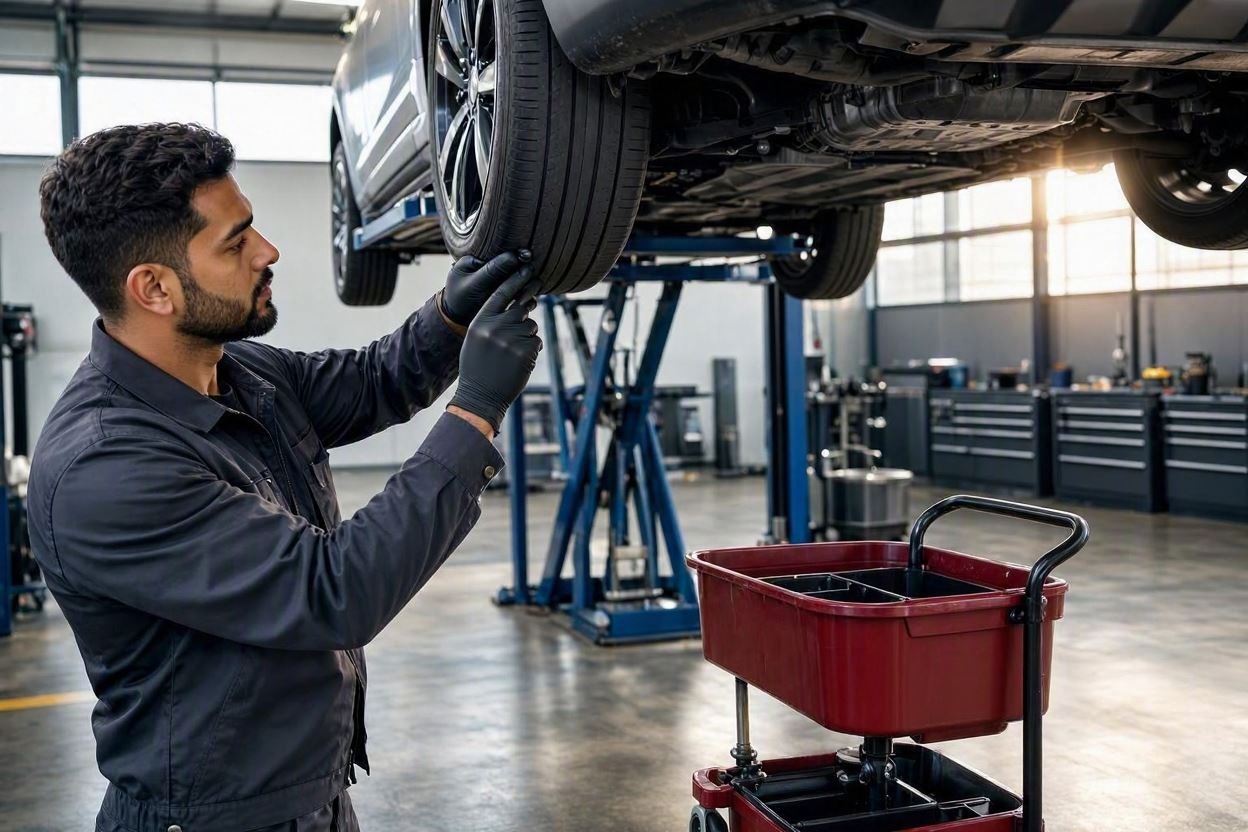
Last week, a customer named Marcus rolled his front-wheel-drive sedan into my service bay, complaining about a rhythmic, deafening roar coming from the front end. He was absolutely convinced a wheel bearing was failing. I put his car up on the lift, spun the front wheels, and ran my bare hand across the tread. I immediately felt deep, wavy dips scooped out of the inside shoulders of both front tires. The rubber looked like a row of hollowed-out spoons—a textbook case of severe tire cupping.
I asked Marcus when he last had his tires rotated. He admitted he had not done it in over 25,000 miles. He figured he was pulling a fast one on the industry, saving money by skipping the $20 standalone rotation fee during his last three oil changes. That skipped $60 maintenance routine ended up costing him $800 for a brand-new set of tires and a four-wheel alignment, simply because his front tread was chewed down to the steel wear bars and structurally compromised. In my three decades on the shop floor, I see this exact mistake destroy budgets every single week.
How FWD and AWD Punish Tires Differently
Many drivers wrongly assume tires wear down evenly on all four corners. Vehicle physics dictates otherwise. Different drivetrains subject rubber to completely different mechanical torture:
- Front-Wheel Drive (FWD): On an FWD vehicle, the front axle is the undisputed workhorse. Your front tires deliver 100% of the engine's torque to the pavement, handle the aggressive lateral forces of steering, and absorb about 70% to 80% of the vehicle's braking load. The rear tires are essentially just rolling along for the ride. This intense front bias means your front tires degrade two to three times faster than the rears.
- All-Wheel Drive (AWD): While AWD splits engine power across all four wheels, the front tires still bear the brunt of steering friction and heavy engine weight. But for AWD owners, uneven tread wear is not just about wasting rubber; it is about protecting the drivetrain from annihilating itself.
The AWD Danger: Incinerating Your Center Differential
If you ignore tire rotations on an AWD vehicle, the front and rear axles wear unevenly, creating a critical difference in tire diameters. AWD systems demand that all four tires maintain an identical rolling circumference to distribute torque safely. Major manufacturers enforce a strict tolerance of no more than 2/32 of an inch of tread depth variance between all four tires. That tiny tread gap equals a quarter-inch difference in rolling circumference.
When you drive on mismatched tire diameters, the smaller, worn tires have to spin slightly faster than the taller, newer tires just to cover the exact same distance on the highway. As a result, your AWD system's center differential, viscous coupling, or multi-plate clutch pack is forced to work continuously to manage this artificial speed difference. These components are designed to slip only during tight parking lot turns or over brief patches of ice. Forcing them to slip constantly under dry-road loads generates extreme friction and heat. Over time, this heat cooks the differential fluid, hardens internal seals, and burns out the clutches. Replacing a destroyed center differential or transfer case is a massive mechanical overhaul that runs between $1,500 and $3,000 in parts and labor.
The True Cause of Tire Cupping
Tire cupping, also known as scalloping, is an irreversible death sentence for your tires. It happens when aging suspension components—specifically shocks, struts, or control arm bushings—lose their ability to damp spring oscillations and keep the tire planted on the asphalt. The wheel begins to violently bounce or flutter as you drive. Every time the tire bounces up and slams back down onto the road, a tiny patch of rubber is scraped away. Rotating tires at proper intervals allows a mechanic to put eyes on your tread and catch these suspension issues early, long before cupping ruins your rubber.
The Ultimate Money-Saving Hack: Bundling Services
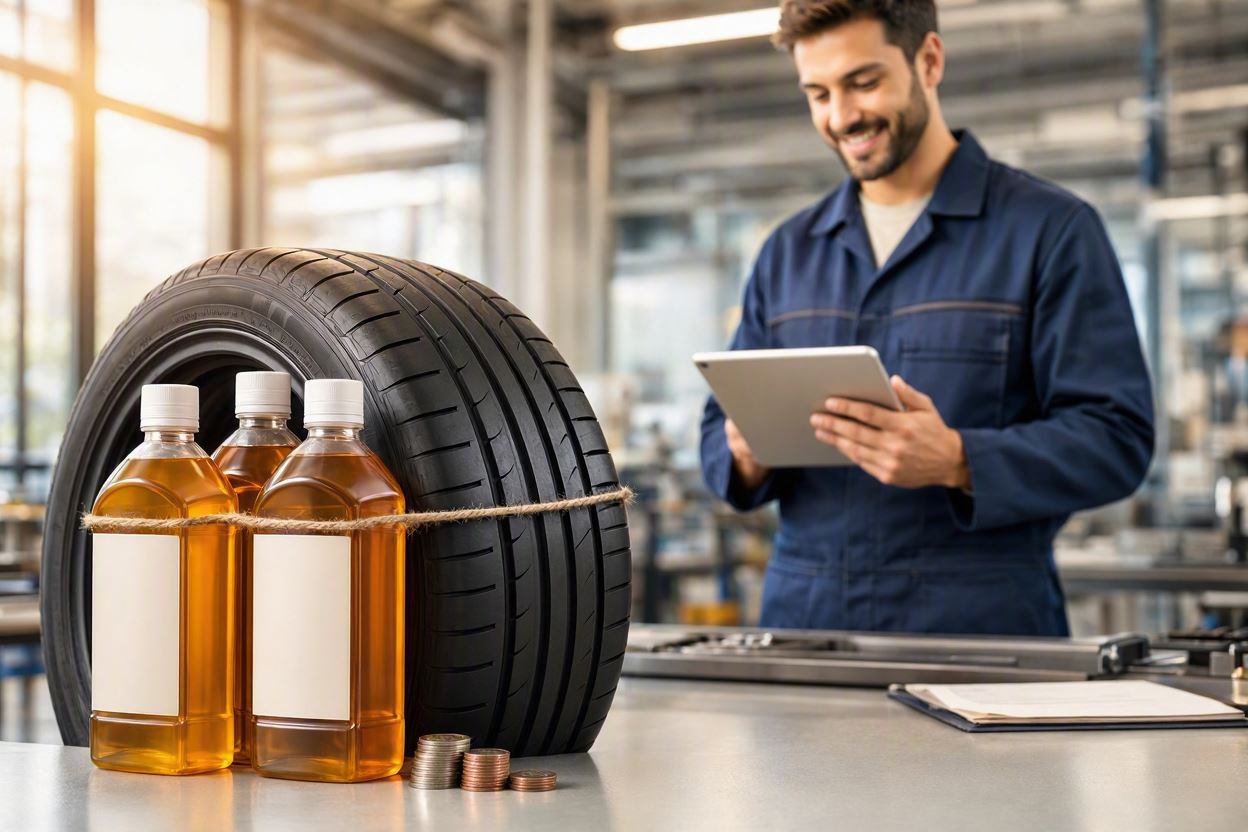
Let us look at the financial math. A quality set of passenger tires averages $150 to $350 per tire. By the time you factor in mounting, balancing, and disposal fees, a complete replacement easily hits $800 to $1,400. Meanwhile, the average cost of a standalone tire rotation at major US auto chains is a mere $20 to $50. Wasting a thousand dollars in tire life to save twenty bucks is a brutal financial error.
The smartest hack in auto maintenance is bundling. Instead of paying standalone fees, schedule your tire rotation at the exact same time as your routine oil change. National full-service centers routinely bundle a complimentary tire rotation and complete safety evaluation directly into their synthetic oil packages. This tactic ensures your tires are rotated exactly when the manufacturer recommends—every 5,000 to 7,500 miles—without ever paying standalone labor rates.
Bundle Your Oil Change & Tire Rotation
Never pay standalone labor rates to rotate your tires. Capture full mechanical lift care and bundled tire rotation by claiming a verified firestone oil change coupon $25 off before scheduling your bay visit.
Compare Deals Across Nationwide Service Centers
Review regional rates and dodge counter fees by exploring verified oil change coupon specials across all major automotive repair chains.
Browse Verified OffersThe Bottom Line
Skipping routine tire maintenance is a guaranteed way to bleed cash. If your dashboard sticker says it is time for fresh oil, do not let a shop hit you with high standalone fees to swap your wheels. Protect your drivetrain from catastrophic failure, keep your tread wearing evenly, and always lock in verified digital promo discounts before your vehicle enters the bay so you capture full-service garage care without stretching your budget.