
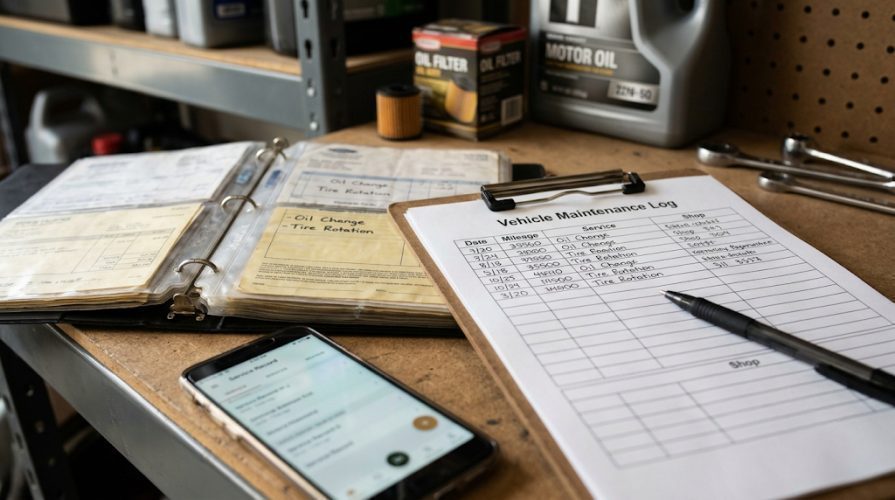
Shoving crumpled quick-lube receipts into your glovebox isn't a real maintenance strategy. When it comes time to sell your car, trade it in at a dealership, or fight an automaker over a denied engine warranty claim, a clean, organized vehicle maintenance log is easily worth hundreds—sometimes thousands—of dollars.
Whether you're starting a fresh car maintenance record for a brand-new SUV, logging driveway oil changes to keep your factory warranty intact, or trying to track down the missing auto maintenance history on a used pickup truck, this guide covers the simplest ways to document your vehicle's upkeep without turning it into a part-time job.
Why Keeping Maintenance Records Actually Pays Off
Most drivers only think about service paperwork after something expensive breaks. In reality, keeping organized maintenance records protects your bank account in four very specific ways:
- Protects Your Factory Powertrain Warranty: Modern turbocharged and direct-injection engines are notorious for timing chain stretch, oil consumption, and turbo bearing wear. If your engine fails at 48,000 miles under a 60,000-mile warranty, the first thing the dealership's regional inspector will demand is proof of scheduled oil changes. Under the federal Magnuson-Moss Warranty Act, an automaker cannot void your warranty just because you used an express bay like Valvoline, Take 5, or Jiffy Lube instead of the dealership—provided you have dated receipts showing mileage, oil viscosity, and filter specs.
- Commands $500 to $1,500 More on the Used Market: Used car buyers in 2026 are rightfully skeptical of neglected engines and skipped CVT transmission fluid changes. Handing a private-party buyer a chronological binder or digital PDF folder of every oil change, tire rotation, and coolant service instantly separates your car from sketchy Craigslist listings.
- Stops Quick-Lube Upsells Cold: We've all been there—you pull into a drive-thru bay for a $65 oil change, and ten minutes later a technician walks up holding a dusty cabin filter or warning that your differential fluid is "burnt." Knowing which oil change upsells to skip at quick-lube shops and pulling up your phone's service log lets you verify in five seconds whether you already replaced that exact part 8,000 miles ago.
- Catches Hidden Mechanical Issues Early: Logging how many quarts of oil your engine needs between changes or tracking uneven tire tread depths across rotations helps you spot slow oil burning or alignment problems long before they destroy a catalytic converter or a set of $900 tires.
What to Include in Your Vehicle Maintenance Log (Simple Template)
You don't need expensive fleet software to maintain a rock-solid car maintenance record. A basic Google Sheet, an Apple Notes table, or a $4 spiral notebook tucked inside your center console works fine—as long as you capture five essential details after every shop visit:
| Date | Odometer (Miles) | Service Performed | Parts & Fluid Specs | Shop / Cost & Notes |
|---|---|---|---|---|
| 03/12/2026 | 40,120 | Full Synthetic Oil & Filter | 5.4 qts 0W-20 API SP / OEM Filter | Take 5 ($62 w/ $20 coupon) |
| 07/19/2026 | 45,310 | Oil Change + Tire Rotation & Balance | 5.4 qts 0W-20 / Wix 57047 Filter | Valvoline ($74 w/ bundle deal) |
| 10/04/2026 | 48,900 | Engine & Cabin Air Filters (DIY) | Denso 143-3004 / Fram Fresh Breeze | AutoZone parts ($34 total, 10 mins) |
| 11/14/2026 | 50,480 | Full Synthetic Oil + Transmission Drain & Fill | 0W-20 Synthetic + 4 qts OEM ATF | Independent Mechanic ($215 total) |
Mechanic's Rule on Thermal Paper Receipts: Nearly every quick-lube chain, tire shop, and auto parts store prints invoices on heat-sensitive thermal paper. Leave those receipts in a hot glovebox over one July afternoon, and the ink will fade into an unreadable white slip. Always snap a quick smartphone photo of the paper invoice before you pull out of the parking lot and upload it to a dedicated Google Drive or iCloud folder.
Master Mileage Checklist: What Your Car Maintenance Record Should Show
If you're auditing your own auto maintenance history—or inspecting a used car's paperwork before buying—use this standard mileage timeline to spot dangerous gaps in service:
- Every 5,000 to 7,500 Miles (or 6 Months): Full synthetic motor oil and filter replacement, tire rotation, tire pressure adjustment, and a quick check of coolant and brake fluid reservoirs. Even if your dashboard oil-life monitor claims you can stretch intervals to 10,000 miles, city traffic, short winter commutes, and turbocharger heat break down oil additives much faster.
- Every 15,000 to 20,000 Miles: Engine air filter and cabin air filter replacement, wiper blade swap, and a thorough brake pad thickness measurement (measured in millimeters).
- Every 30,000 to 45,000 Miles: Automatic or CVT transmission fluid drain-and-fill (avoiding the high-pressure transmission flush scam on older gearboxes), brake fluid exchange, and front/rear differential or transfer case fluid service on AWD and 4WD SUVs.
- Every 60,000 to 75,000 Miles: Engine coolant drain and refill, serpentine accessory belt inspection, and spark plug replacement on turbocharged 4-cylinder and V6 engines (which chew through plugs faster than older naturally aspirated motors).
- Every 90,000 to 105,000 Miles: Spark plugs on standard non-turbo engines, water pump and timing belt replacement (if your engine uses a rubber timing belt rather than a metal chain), and suspension strut/shock inspection.
How to Log DIY Oil Changes Without Voiding Your Warranty
Changing your own oil and filters in your driveway is completely legal under federal warranty law, but a handwritten note on a napkin won't convince a skeptical dealership service manager if your engine seizes. If you do your own wrenching, back up your vehicle maintenance log with three pieces of proof:
- Save Itemized Parts Receipts: Keep the digital or photographed store receipt showing the exact date you bought the motor oil and oil filter. Make sure the receipt clearly displays the oil weight (e.g., 0W-20 or 5W-30) and confirms it meets your manufacturer's required specification (such as API SP, ILSAC GF-6, GM dexos1 Gen 3, or BMW LL-01).
- Keep the Filter Box Flap: Tear off the cardboard UPC barcode flap from the oil filter box, write the date and exact odometer mileage on it with a Sharpie, and snap a photo of it next to your dashboard odometer cluster.
- Log the Entry in an Official Portal: Enter your DIY service immediately into the Carfax Car Care app or your automaker's official owner portal (Toyota, Ford, Subaru, and Honda all allow owners to self-report driveway maintenance by VIN).
How to Check Your Car's Auto Maintenance History for Free
Bought a used car with an empty glovebox, or lost your folder of old shop invoices during a move? Because over 85% of major quick-lube chains, dealerships, and tire centers automatically report service visits by VIN, you can reconstruct your auto maintenance history in about five minutes without paying for a $45 report:
- Carfax Car Care App (100% Free for Owners): Download the free Carfax Car Care app and enter your license plate or 17-digit VIN. While a full Carfax buyer report costs money, the owner maintenance tracker is completely free and displays every oil change, tire rotation, alignment, and brake job reported by participating shops—including Jiffy Lube, Valvoline Instant Oil Change, Take 5, Midas, and Firestone.
- Automaker Owner Websites: Create a free account on your vehicle brand's official owner site (such as MyToyota, FordPass, MySubaru, or HondaLink) and input your VIN. You'll get instant access to every dealership warranty repair, software update, safety recall, and pre-delivery inspection ever performed on the car.
- Call Your Go-To Quick-Lube Chain Directly: If you routinely visit the same national drive-thru oil change chain, their central database stores your entire vehicle service history under your phone number, license plate, or VIN. Ask the manager on your next visit to print or email a multi-year summary printout for your binder.
Frequently Asked Questions About Car Maintenance Records
Do quick-lube oil changes show up on Carfax?
Yes. Almost all major national chains—including Valvoline Instant Oil Change, Jiffy Lube, Take 5 Oil Change, Midas, Meineke, and Firestone Complete Auto Care—automatically upload your visit date, odometer reading, and performed services to Carfax via your VIN within a few days of your invoice closing.
How long should you keep car maintenance receipts?
Keep every maintenance receipt for the entire time you own the vehicle, and hand the organized folder (or digital link) to the next buyer when you sell it. If you lease your vehicle, hold onto all service invoices for at least six months after turning the car back in to protect yourself against unexpected lease-end wear-and-tear billing disputes.
Keep Your Service Log Full Without Overpaying at the Bay
The hardest part of maintaining a spotless 5,000-mile synthetic oil log isn't tracking the dates—it's stomaching $100+ walk-in menu prices every few months. Before you head out for your next scheduled interval, grab a verified Jiffy Lube $30 off coupon or check active deals for Valvoline, Take 5, Midas, and Firestone right here on OilChangeHack to cut your bill down to size while keeping your warranty records 100% up to date.