
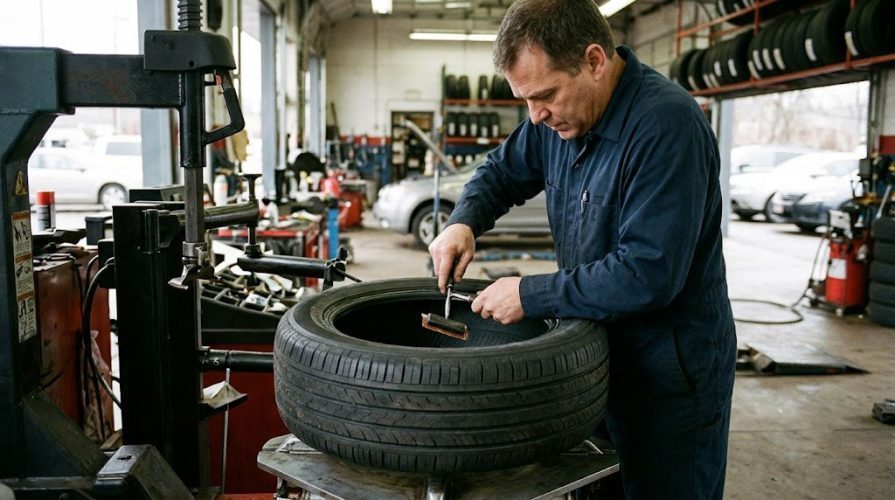
Finding a screw or a nail in your tire tread is one of the most frustrating inconveniences for a driver. Whether your tire is steadily losing air in your driveway or the low-pressure TPMS warning light flashed on your dashboard during a morning commute, knowing what to expect at the repair shop helps you avoid overpaying.
Below is the complete breakdown of how much a tire puncture repair, patch, or plug costs at national service centers like Firestone, Midas, and local independent tire shops.
How Much Does a Tire Repair Cost?
On average, a professional flat tire repair in the United States costs between $15 and $40 for a standard tread puncture. If you take your vehicle to a dedicated tire center or a major national chain, prices typically fall into these ranges:
| Service Type | Average Cost | What’s Included |
|---|---|---|
| Standard Plug-Only (Roadside) | $15 – $25 | External rubber plug inserted without removing the tire (not recommended for long-term safety). |
| Professional Patch & Plug (Inside Out) | $20 – $45 | Tire removed from the rim, inspected for internal damage, and sealed with a combined patch-plug unit. |
| TPMS Re-balance & Sensor Check | +$10 – $20 | Optional balancing if weights shifted or if the tire bead was broken during heavy impact. |
| Flat Tire Repair at Firestone / Midas | Free to $35 | Often free if you purchased the tires directly from them or carry an active road hazard warranty. |
The Bottom Line: If you are already stopping by an automotive service center for routine maintenance—such as checking your engine oil or routine diagnostics—ask the technician to inspect your tread. Many full-service locations will inspect a slow leak or patch a minor puncture quickly.
Patch vs. Plug: Why the Inside-Out Method Matters
If a roadside mechanic or gas station attendant tries to fix your flat tire from the outside using just a rubber string (a "plug"), be cautious. Industry safety standards established by the U.S. Tire Manufacturers Association (USTMA) dictate that a reliable, permanent repair requires a combined patch-plug.
- The Internal Patch: Seals the inner liner of the tire so air cannot escape around the puncture channel.
- The Rubber Stem (Plug): Fills the hole through the steel belts and rubber tread, preventing moisture from entering and rusting the internal steel cords.
To perform this correctly, the technician must dismount the tire from the wheel rim, buff the inner liner, apply vulcanizing cement, and pull the stem through from the inside.
When Can a Tire Be Repaired (And When Must It Be Replaced)?
Not every flat tire can be saved. Mechanics will legally and safely refuse to repair a tire if the damage falls into any of these categories:
- The Puncture is Larger than 1/4 Inch: Holes caused by large bolts or metal shards exceeding 6mm cannot be safely patched.
- Damage in the Sidewall or Shoulder: Any puncture, bubble, or cut on the sidewall or the curved shoulder of the tread area means the structural integrity of the tire is compromised. It must be replaced immediately.
- Run-Flat Damage: If you drove for miles on a completely deflated tire (zero pressure), the inner sidewalls likely crumbled from the weight of the car, destroying the tire casing.
3 Ways to Save Money on Tire Repairs and Maintenance
1. Check Your Original Tire Purchase Warranty
If your tires were purchased new from national chains like Firestone, Discount Tire, or Costco, a basic flat repair or puncture patch is frequently free of charge as part of their standard customer courtesy or tread warranty.
2. Look for Free Repair Perks at Local Shops
Many independent family-owned tire shops offer free flat repairs entirely as a loss-leader strategy to build local trust, hoping you will remember them when you eventually need to buy a brand-new set of four tires.
3. Bundle Tire Service with Routine Maintenance
If you notice a slow leak while preparing for an oil change or major fluid service, try to get both done in one trip. Mentioning your tire pressure issue while utilizing a valid midas oil change coupon at local shops can sometimes prompt the service manager to waive or heavily discount the minor tire repair labor fee altogether.
Frequently Asked Questions (FAQ)
Is it safe to drive on a tire plug?
An exterior plug installed without removing the tire is fine for an emergency roadside fix to get you to a proper shop, but it should not be treated as a permanent solution. For highway speeds and long-term safety, always insist on an internal patch-plug.
How long does a tire patch take?
A professional inside-out tire repair usually takes between 20 to 30 minutes. This includes jacking up the car, removing the wheel, dismounting the tire, patching the inner liner, re-mounting, balancing, and reinstalling the wheel.
Do national chains like Midas or Firestone repair flat tires?
Yes. Both Midas and Firestone Complete Auto Care locations handle tire repairs, flat patching, wheel balancing, and tire rotations alongside traditional oil changes and mechanical repairs.