
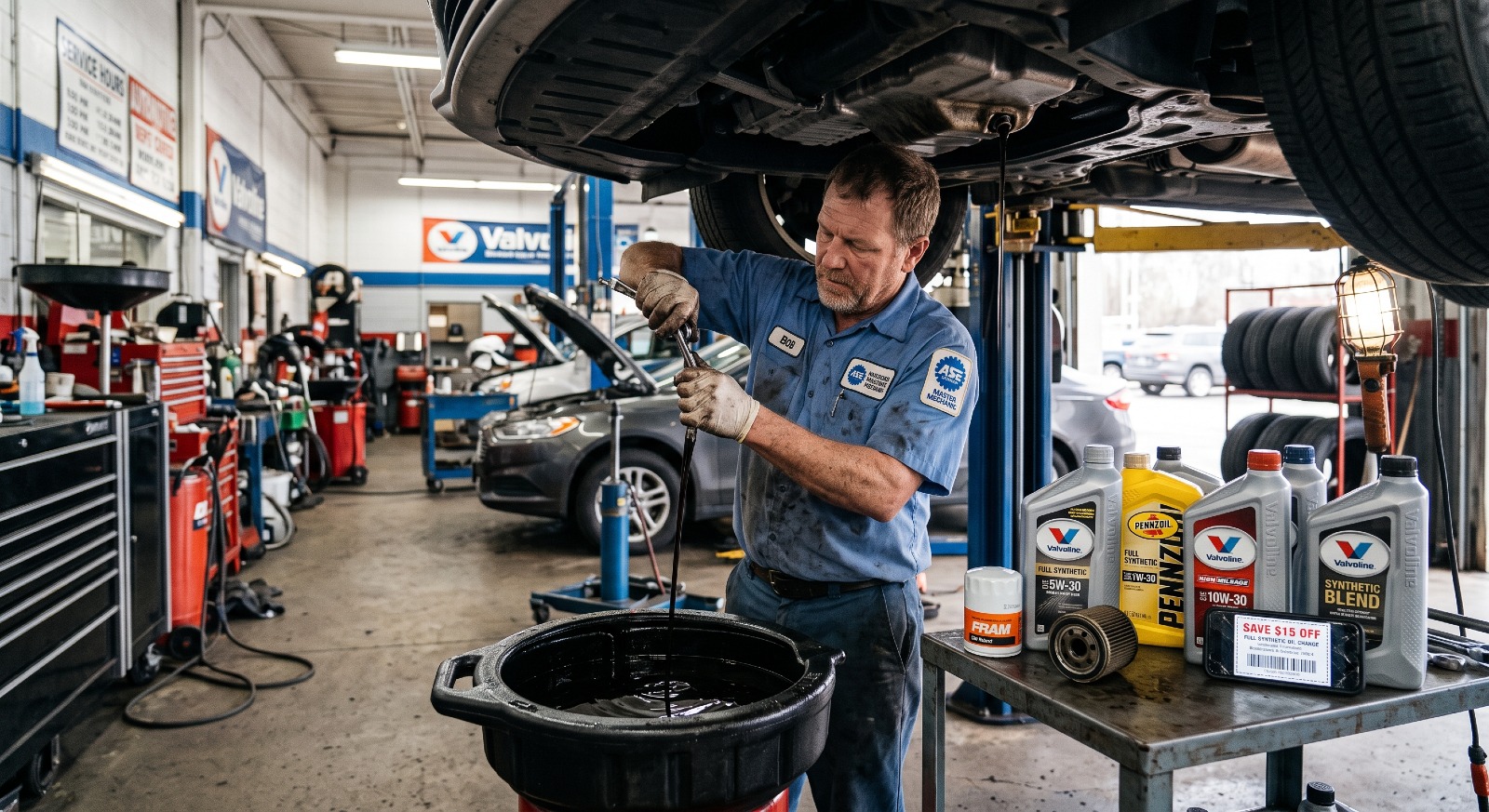
Let’s get one thing straight from the jump. Motor oil is the literal lifeblood of your engine. Without it, the metal-on-metal friction inside your engine block generates enough heat to weld the pistons directly to the cylinders. I have seen it happen, and it is an ugly, incredibly expensive mess.
Keeping fresh oil in the crankcase is the absolute cheapest insurance policy you can buy for your vehicle. But there is a lot of noise, marketing hype, and upselling out there. Here is the unfiltered truth on how to manage your oil changes, save cash, and keep your car running past the 200,000-mile mark.
The 3,000-Mile Myth vs. Reality
You know that little clear sticker the quick-lube guy slaps on the corner of your windshield? Ignore it.
Unless you are daily driving a carbureted 1982 Chevy truck, the strict 3,000-mile rule is dead. Modern engines run remarkably clean, and today's synthetic oils resist viscosity breakdown infinitely better than the crude poured out decades ago.
Your owner's manual is the ultimate authority. Crack it open. Most manufacturers now recommend intervals between 5,000 and 7,500 miles, with some pushing up to 10,000 miles under normal driving conditions. Better yet, trust your dash. Modern oil life monitors aren't just dumb mileage counters. They calculate engine temperatures, trip lengths, and idle time to give you a highly accurate reading of your oil's remaining lifespan.
Mechanic's Pro Tip: If you do a ton of short-trip driving where the engine never hits full operating temperature, moisture builds up in the crankcase. That condensation eventually leads to heavy sludge buildup. In that specific scenario, change your oil sooner rather than later, regardless of what the manual recommends.
Breaking Down the Liquid Gold: Types of Motor Oil
Walk down the auto parts aisle, and the sheer number of plastic jugs is blinding. Here is what you actually need to know.
Understanding Viscosity
Viscosity is just a fancy word for resistance to flow. You will see numbers like 5W-30. The "W" stands for Winter. The first number (5) indicates how well the oil flows when the engine is freezing cold, ensuring your oil pump can push it up to the valvetrain immediately on a winter morning. The second number (30) indicates the oil's thickness and protection level at full operating temperature. Always use the exact weight stamped on your oil cap.
The Four Main Categories
- Conventional: Dinosaur oil. It is cheap and gets the job done for older commuter cars with basic engine designs.
- Full Synthetic: The good stuff. Engineered in a lab to resist extreme heat and shearing forces. It flows better in the cold and provides maximum protection.
- Synthetic Blend: The middle ground. Half lab-made, half conventional crude. A decent budget upgrade.
- High Mileage: Formulated with seal-swelling additives. If your odometer is north of 75,000 miles and you notice a tiny drip on the driveway, this helps condition aging gaskets and stop minor leaks.
How Much Should an Oil Change Cost?
Prices fluctuate, but here is what you should expect to pay across the US today:
- Conventional Oil Change: $40 to $60
- Full Synthetic Oil Change: $70 to $120+
Dealerships charge a premium to cover OEM filters and "multipoint inspections." Quick-lube spots get you in and out fast but rely heavily on high-pressure upsells. Doing it yourself in the driveway costs roughly $35 to $55 in raw materials, depending on the oil brand you catch on sale.
Smart Ways to Save: Never Pay Full Price
Here is the absolute truth about massive drive-thru chains like Valvoline, Jiffy Lube, and Take 5. Those quick-lube places print money, but they also print coupons.
Never pay the sticker price on the board. Take 30 seconds to search for a barcode online while you're sitting in the waiting room—it's free money. These chains run constant $15-off or $25-off synthetic specials to drive car counts. Bookmark their coupon pages. Show the tech the barcode on your smartphone before you swipe your card. Keep a close eye out for seasonal holiday specials around Memorial Day or early winter, too.
Mechanic's Pro Tip: The real profit for those drive-thru bays isn't the motor oil—it's the engine air filter and the cabin air filter. They will pull yours out, point a flashlight at a speck of dust, and quote you $40 to replace it. Decline it. Buy the exact same filters online for $15 and snap them in yourself in your driveway in two minutes.
DIY vs. Professional Service
Should you do it yourself?
The Pros: You know it is done right. You get to select your exact brand of premium oil, and nobody is going to pressure you into a coolant flush you don't need.
The Cons: Disposing of 5 quarts of dirty oil is a hassle. You have to take it to an auto parts store for recycling. Plus, you have to crawl on the concrete.
Safety & Quality Warning: If you do this at home, always use heavy-duty jack stands. Never trust a cheap hydraulic floor jack with your life. Furthermore, do not cheap out on the oil filter. Bargain-bin filters have flimsy bypass valves. If that valve fails or the filter clogs, dirty, unfiltered oil bypasses the media entirely and goes straight into your main bearings. Spend the extra four bucks for a premium filter.
Mechanic's Pro Tip: Hand-tighten the oil filter, and just snug the drain plug with a wrench. Over-tightening strips the threads on the oil pan, instantly turning a simple Saturday morning chore into a massive repair bill.
Top Warning Signs: Is Your Oil Cooked?
Pop the hood, pull the dipstick, and wipe it on a clean rag. Dip it again. Look, feel, and smell.
- Color: Amber is new. Black isn't necessarily bad; oil turns dark quickly as it cleans carbon from the cylinders. But if it looks like a thick, muddy, chocolate milkshake, you have engine coolant leaking into the block. That means a blown head gasket.
- Texture: Rub a drop of oil between your thumb and index finger. If it feels distinctly gritty, you have metal shavings or severe dirt contamination in the system. Stop driving.
- Smell: If it smells acrid and heavily burnt, the oil is heavily degraded and completely overdue for a change.
- Engine Noise: Hear a loud, metallic ticking sound from the top of the engine when you start it cold? Your hydraulic lifters might be starving for oil due to low pressure, low fluid level, or heavy sludge blocking the galleys.
The Bottom Line
Don't overthink routine maintenance, but definitely don't ignore it. Buy the right viscosity, use a quality filter, and stick strictly to your owner's manual schedule. A $75 synthetic oil change is absolute pennies compared to a $4,000 engine swap. Keep it slick, keep it running, and keep your hard-earned money in your wallet.