
You pull into an express lube service bay expecting a routine, twenty-minute maintenance stop. But before the oil drain plug is even back in place, the service advisor walks over to your window holding a digital diagnostics tablet. They look concerned. "Your transmission fluid is turning dark amber," they warn. "Our computerized high-pressure fluid exchange machine can purge the entire system, clean the cooler lines, and restore factory shift response right now." The price tag? An extra $180 to $260 added directly to your afternoon bill.
For millions of vehicle owners, this proposition sounds like conscientious automotive care. However, subjecting a modern automatic transmission—especially one with more than 60,000 miles—to an aggressive chemical machine flush can turn a smoothly operating gearbox into a slipping, shuddering repair liability. At OilChangeHack, our automotive research team continuously investigates shop service procedures so drivers can easily separate necessary mechanical maintenance from high-margin waiting-room upsells.

Transmission Flush vs. Drain and Fill: The Critical Mechanical Difference
Understanding why seasoned transmission technicians often advise against quick-lube fluid flushes begins with distinguishing between a proper factory fluid service and a commercial sales package:
- Traditional Drain and Fill (Pan Drop): A technician pulls the transmission drain plug or unbolts the lower transmission oil pan. This process drains only the standing fluid located in the pan—typically 40% to 60% of the total system capacity (roughly 3 to 5 quarts). The internal filter is replaced, metal wear shavings gathered by the pan magnet are wiped clean, and fresh original manufacturer fluid is added. This gently restores depleted chemical additives and friction modifiers without shocking internal clutch seals.
- Commercial Transmission Flush (Machine Fluid Exchange): Technicians tap into your external transmission cooler lines and connect a high-pressure pneumatic exchange unit. The machine forces 12 to 16 quarts of universal fluid backwards and forwards through the torque converter, valve channels, and cooling circuits, often circulating harsh solvent detergents intended to dissolve internal varnish.
While an automated flush replaces 100% of the fluid volume, that pressurized agitation introduces significant mechanical hazards into aging transmissions.
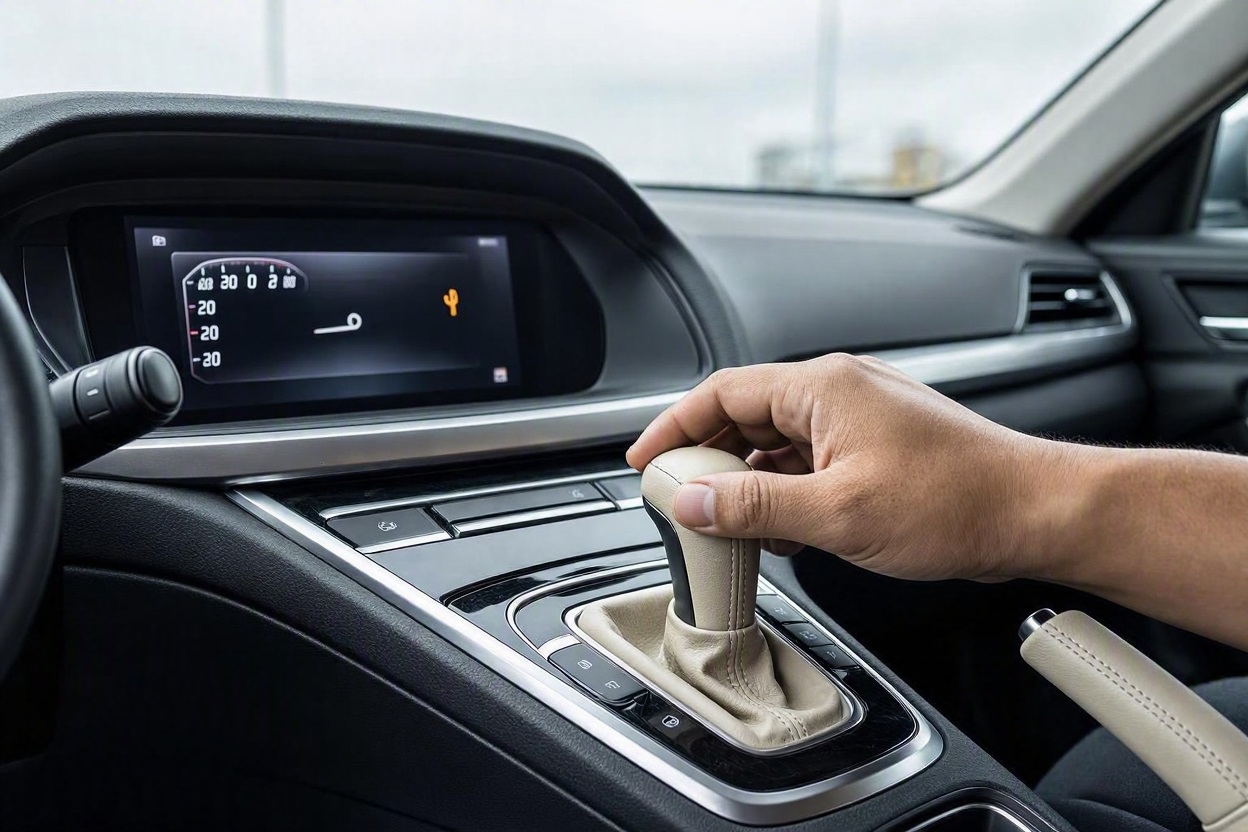
The High-Mileage Trap: Why Fresh Fluid Causes Transmission Slipping
Modern automatic transmissions rely on hydraulic clamping force applied across multi-plate wet clutch packs. Over tens of thousands of thermal cycles, microscopic friction material naturally shears off the clutch discs and remains suspended in the transmission fluid. In higher-mileage vehicles that have not received strict 30,000-mile fluid updates, this suspended particulate actually provides the critical hydraulic friction coefficient required for worn clutch discs to grip steel separator plates.
When an aggressive machine flush washes away this particulate and replaces it with slick, high-detergency fluid, two common failures occur:
- Immediate Clutch Slippage: Worn, polished clutch plates can no longer maintain mechanical friction against steel plates. Drivers leave the bay only to experience engine rev flares between gears or violent, delayed gear engagement.
- Dislodged Debris in the Valve Body: The high-velocity reverse flow from flush machines dislodges hardened varnish flakes and carbon particles from deep within the torque converter. This debris flows directly into delicate electro-hydraulic shift solenoids, jamming tiny 0.2mm spool valves and disabling gear shifting entirely.
Smart Maintenance Tip: Stick to Routine Engine Care
Avoid complicated fluid flushes during quick drive-thru visits. Focus on scheduled engine lubrication instead. If your vehicle is due for a synthetic oil refresh, claim an active take 5 oil change coupon or grab a verified $20 off Valvoline discount before paying full retail prices.
The Universal Fluid Issue: One Size Does Not Protect All
Automobile manufacturers formulate proprietary transmission fluids with exacting viscosity, anti-shudder, and thermal stability requirements: Ford Mercon LV, GM Dexron VI, Honda ATF DW-1, Toyota WS, and Nissan CVT fluids are not cross-compatible. Quick-lube drive-thru facilities rarely stock individual drums for every manufacturer specification. Instead, they commonly rely on bulk drums of "Multi-Vehicle Universal ATF" blended with an aftermarket chemical additive package.
Introducing non-certified universal fluids into modern 8-speed, 10-speed, or Continuously Variable Transmissions (CVTs) frequently degrades torque converter lockup clutch performance, leading to shuddering and premature hydraulic degradation within several thousand miles.
What Car Manufacturers Officially State
Leading automotive manufacturers explicitly advise against aftermarket chemical flush machines in their factory service bulletins:
- Honda / Acura: Formally instructs dealership technicians not to use chemical flush solvents or pressurized exchange equipment, stating that sequential drain-and-fill services using genuine fluid are the only approved procedure.
- General Motors: Explicitly notes in technical service bulletins that pressurized transmission flushes and aftermarket flush solvents are not approved and can erode internal synthetic seals.
- Toyota: Mandates factory-approved fluid without unverified additives to preserve warranty terms and avoid shift solenoid degradation.
Skip Waiting Room Upsells & Save Today
Keep your maintenance invoice clean by declining costly machine flushes and locking in discounted rates on core preventative services.
View Today's Verified Service DealsThe 3-Question Test: How to Decline the Flush with Authority
The next time you visit a service center using coupons for jiffy lube oil change maintenance and a technician pushes a fluid exchange machine, ask these three straightforward questions:
- "Does your procedure drop the oil pan, clean the collection magnet, and replace the internal filter, or is this solely a fluid line hookup?" (If they do not drop the pan, old contaminants remain trapped on the internal filter screen).
- "Are you filling this with sealed OEM-specified fluid or a bulk universal blend with an additive?"
- "Will the facility provide a written warranty covering transmission slippage for the next 10,000 miles if clutch material is washed away?"
Because express lube bays operate on speed and do not carry internal filter replacements or provide major transmission warranties, the advisor will routinely retract the sales pitch immediately.
Protect Your Transmission Without Wasting Money
If your vehicle has well over 100,000 miles and the transmission fluid has never been serviced, the safest mechanical choice is often to leave the unit alone, or have an independent specialist perform a gentle gravity drain-and-fill. If you suspect legitimate transmission shuddering or gear slipping, consulting dedicated full-service repair facilities like Midas makes far more mechanical and financial sense than taking chances with quick-lube flush equipment.
For your routine service visits, focus on core engine care: fresh high-grade synthetic oil and a new factory filter. If you are heading to the shop for routine engine maintenance instead, make sure to check out our latest firestone oil change coupon deals or browse our complete coupon directory to save on your next visit while keeping unnecessary high-pressure upsells completely off your invoice.