

Modern crossover benchmarks are defined by precision engineering, and the 2016 Mazda CX-5 remains one of the sharpest handling, most reliable compact SUVs on American roads. At the center of its long-term durability is Mazda's proprietary SkyActiv-G powertrain architecture. Engineered with ultra-high compression ratios and sophisticated dual sequential valve timing, these engines deliver an exceptional balance of fuel economy and responsive power.
Yet, completing a proper 2016 Mazda CX-5 oil change requires an exact lubrication strategy. Whether your crossover is an original daily commuter crossing 60,000 miles or a high-mileage road warrior pushing past 150,000 miles, routine fluid maintenance is where mechanical longevity is won or lost. Unfortunately, franchised Mazda dealership service drives routinely invoice between $115 and $160 for a routine Mazda CX-5 oil change. Navigating these maintenance costs requires understanding your engine's true fluid tolerances, recognizing how aging SkyActiv internals alter service needs, and leveraging independent quick-lube networks to cut routine ownership expenses in half.
2016 Mazda CX-5 Technical Lubrication Specifications
The 2016 model year marked the refined mid-cycle refresh of the first-generation CX-5 (KE platform). Depending on trim level, your vehicle houses either the naturally aspirated 2.0-liter or the more ubiquitous 2.5-liter SkyActiv-G four-cylinder engine. Both powerplants feature distinct sump volumes, tight internal oil passages, and strict fluid certification requirements.
| Specification Parameter | SkyActiv-G 2.0L Engine | SkyActiv-G 2.5L Engine |
|---|---|---|
| Factory Recommended Viscosity | SAE 0W-20 Full Synthetic | SAE 0W-20 Full Synthetic |
| Mandatory Oil Certifications | API SP / SN PLUS, ILSAC GF-6A | API SP / SN PLUS, ILSAC GF-6A |
| Oil Capacity (With Filter Change) | 4.4 US Quarts (4.2 Liters) | 4.8 US Quarts (4.5 Liters) |
| Oil Capacity (Drain & Fill Only) | 4.2 US Quarts (4.0 Liters) | 4.4 US Quarts (4.2 Liters) |
| Drain Plug Torque Specification | 22 – 30 lb-ft (30 – 41 N·m) | 22 – 30 lb-ft (30 – 41 N·m) |
| Drain Plug Fastener Type | 8 mm Hex / Allen Key Bit | 8 mm Hex / Allen Key Bit |
| OEM Crush Washer Part # | Mazda 9956-41-400 (Aluminum) | Mazda 9956-41-400 (Aluminum) |
| OEM Oil Filter Part # | 1WPE-14-302 / PE01-14-302A | 1WPE-14-302 / PE01-14-302A |
Known Mechanical Weaknesses & Oil-Related Issues (2016 Mazda CX-5)
Mazda's naturally aspirated SkyActiv-G engines (the 2.0L PE-VPS and 2.5L PY-VPS) are exceptionally engineered, but their ultra-high compression ratios (13.0:1 in the US) and direct-injection fuel delivery create unique internal vulnerabilities when oil maintenance is neglected:
- Oil Control Ring Sticking & Carbon Coking: To maximize fuel economy, SkyActiv pistons use low-tension piston rings and micro-drilled oil return passages. Pushing oil past 6,000 miles breaks down the fluid, baking varnish into these microscopic ports. The rings seize inside their lands, causing sharp oil consumption (often burning 1 to 2 quarts every 3,000 miles).
- Severe Fuel Dilution (Crankcase Gas Wash): High-pressure direct-injection pumps spray fuel directly into the combustion chamber at up to 2,900 psi. During short winter drives, raw fuel washes down cold cylinder bores straight into the oil pan. The dipstick oil level actually rises, smells strongly of gasoline, and shears 0W-20 down to an unrated, dangerously thin viscosity that accelerates bearing wear.
- Dual S-VT Phaser & Hydraulic Chain Tensioner Starvation: The intake camshaft utilizes an electric actuator, while the exhaust camshaft relies on precision hydraulics governed by Oil Control Valves (OCV) with microscopic mesh screens. Thickened or sludged oil chokes these micro-screens, causing cold-start timing chain rattle, timing chain slap, and check engine codes P0011 / P0012.
- Intake Valve Carbon Accumulation: Because fuel is sprayed directly into the cylinder rather than over the intake ports, fuel detergents never wash over the backside of the intake valves. Oil mist vented through the Positive Crankcase Ventilation (PCV) system bakes onto the hot valve stems, causing rough idle and misfires over time.
- Oil Pressure Switch & Valve Cover Gasket Leaks: The plastic oil pressure sensor located right above the oil filter housing is notorious for heat stress. By 100,000 miles, the internal plastic casing hairline-fractures, weeping engine oil directly into the electrical connector harness and dripping onto the undertray.
Factory Recommendations vs. What You Should Actually Run
OEM Factory Standard
Mazda’s factory manual for North America explicitly outlines the following requirements:
- Viscosity: SAE 0W-20 Full Synthetic (non-negotiable in US dealership guidelines for CAFE fuel economy compliance).
- Required Standard: API SP / SN PLUS and ILSAC GF-6A. The API SP specification is mandatory: it cuts calcium detergents and introduces magnesium additives specifically to prevent Low-Speed Pre-Ignition (LSPI)—a destructive pre-ignition knock that shatters piston ring lands.
- Factory Fill: Mazda Original Oil Supra-X 0W-20 (blended by Idemitsu). Its defining characteristic is a massive dose of liquid organic molybdenum (MoDTC, around 600–800 ppm), engineered to prevent metal scuffing during automatic restarts on i-Stop equipped models.
The Best Real-World Oil Selection
| Vehicle Mileage & Driving Environment | Recommended Viscosity | Certifications Required | Top Proven Brand Options |
|---|---|---|---|
| Under 100,000 Miles (Year-round commuting / cold states) | 0W-20 Full Synthetic | API SP, ILSAC GF-6A | Idemitsu Zepro Eco Medalist 0W-20, Pennzoil Platinum 0W-20, Valvoline Advanced 0W-20, Mobil 1 AFE 0W-20 |
| Over 100,000 Miles (Mild oil burn / hot summer highway driving) | 5W-20 or High-Shear 5W-30 | API SP, ILSAC GF-6A, Resource Conserving | Valvoline MaxLife High Mileage 5W-30, Pennzoil Platinum High Mileage 5W-30, Castrol Edge 5W-30 |
What People Are Pouring Today & Why It Causes Disasters
- Dumping Heavy 5W-40 or 10W-40: The most common mistake made by general repair shops is pouring thick Euro-spec 5W-40 or 10W-40 to "cure" oil burning on an aging CX-5. This destroys SkyActiv mechanics. Modern SkyActiv journal bearings and variable valve timing circuits have tight tolerances designed strictly for high-flow, low-viscosity fluids. Heavy oils cannot flow fast enough through the oil pump relief valve during cold starts, starving the hydraulic timing chain tensioner and baking more carbon onto the rings because the thick oil cannot drain through the piston's micro-ports.
- Using Euro High-SAPS Oils (ACEA A3/B4): High-SAPS formulations contain elevated levels of calcium, sulfated ash, and phosphorus. While great for older European engines, excessive calcium in a direct-injection SkyActiv engine dramatically triggers LSPI knock events, which can crack a piston land on the highway.
- Conventional Mineral Oil: Pouring cheap conventional bulk oil into a SkyActiv engine breaks down under the engine’s high operating temperatures in under 3,000 miles, turning to engine sludge that clogs the VVT oil control screens.
How to Drive a Mazda CX-5 to Make the Engine Last Forever
Mazda engineers design their powertrains for active drivers, not hypermilers who baby the throttle. To keep a SkyActiv-G clean internally over hundreds of thousands of miles, apply these driving habits:
- Give It the "Italian Tune-Up" Weekly: Never drive your CX-5 exclusively like a golf cart. Direct-injected engines produce soot that accumulates on spark plugs, oxygen sensors, and intake runners. Once the engine is fully warmed up to operating temperature (oil above 190°F), merge aggressively onto the highway with wide-open throttle (WOT) to let the engine spin to 4,500–5,500 RPM. This thermal cycling burns off soft carbon deposits from the combustion chambers and exhaust valves.
- Disable i-Stop in Severe Stop-and-Go Traffic: The auto stop-start system saves pennies in gasoline but puts immense starter-cycle wear on timing chains and journal bearings. If you are stuck in crawling traffic, turn it off to preserve stable crankcase oil pressure.
- Never Idle More Than 60 Seconds: Sitting in cold winter weather idling for 15 minutes to "warm up" the cabin ruins the oil. A cold direct-injected engine runs rich at idle, dumping fuel past cold piston rings into the oil pan. The correct way to warm up a CX-5 is to start the car, wait 30 seconds for the elevated high-idle cold-start sequence to drop below 1,000 RPM, and drive away gently under light throttle.
Seasonal Oil Change Schedules: Winter, Spring, Summer, and Fall
Blindly following Mazda's 7,500-mile or 10,000-mile "Normal" dashboard prompt causes oil-burning nightmares after the warranty expires. North American climate shifts dictate a seasonal approach:
| Season | Primary Mechanical Hazard | Best Maintenance Strategy |
|---|---|---|
| Winter (Nov – Feb) | Sub-zero cold starts, high moisture condensation, heavy fuel dilution from rich idling. | Run 0W-20 Full Synthetic exclusively. Cut your drain interval to 4,000–5,000 miles. Cold-start fuel wash is at its peak; changing the oil right before or in the middle of winter prevents acid buildup in the crankcase. |
| Spring (Mar – May) | Residual moisture, winter fuel residue, dirty winter air filtration. | Spring Refresh Drain: Dump the winter-diluted oil. Replace the engine oil and the engine air filter together to eliminate winter road salt and dust buildup. |
| Summer (Jun – Aug) | Extreme highway heat, towing/roof cargo, high thermal shear of lubricant. | Run 0W-20 or step up to 5W-20 / 5W-30 (especially if your car has over 100k miles). Summer heat vaporizes any lingering fuel, but high oil temps increase oil shear. Change fluid at 5,000 miles. |
| Fall (Sep – Oct) | Fluctuating morning temperatures, preparing for winter cold snaps. | Pre-Winter Prep: Drain summer oil before the first hard freeze, ensuring fresh, zero-weight synthetic lubricant with maximum battery-cranking efficiency is in place before winter arrives. |
4 Physical Traps During a 2016 CX-5 Oil Service
- The Dedicated Undertray Access Panel: Technicians unfamiliar with modern Mazda underbodies often unbolt the entire fiberglass-plastic engine splash shield. The 2016 CX-5 features a dedicated access panel secured by two 10 mm bolts and two plastic push-clips. Road salt and gravel make these plastic clips brittle over time; keeping replacement 8 mm retainer clips (Mazda OEM #BC1D-56-145) handy avoids an unsecured flap.
- The 8 mm Hex Recessed Drain Plug: Unlike traditional Japanese vehicles that feature standard 14 mm or 17 mm exterior hex bolt heads, the SkyActiv aluminum oil pan uses a recessed 8 mm Allen (Hex) head bolt. Inexperienced lube techs frequently strip the internal splines by forcing a Torx T45 bit into the recess. Verify that an 8 mm hex bit is cleanly and fully seated before torque is applied.
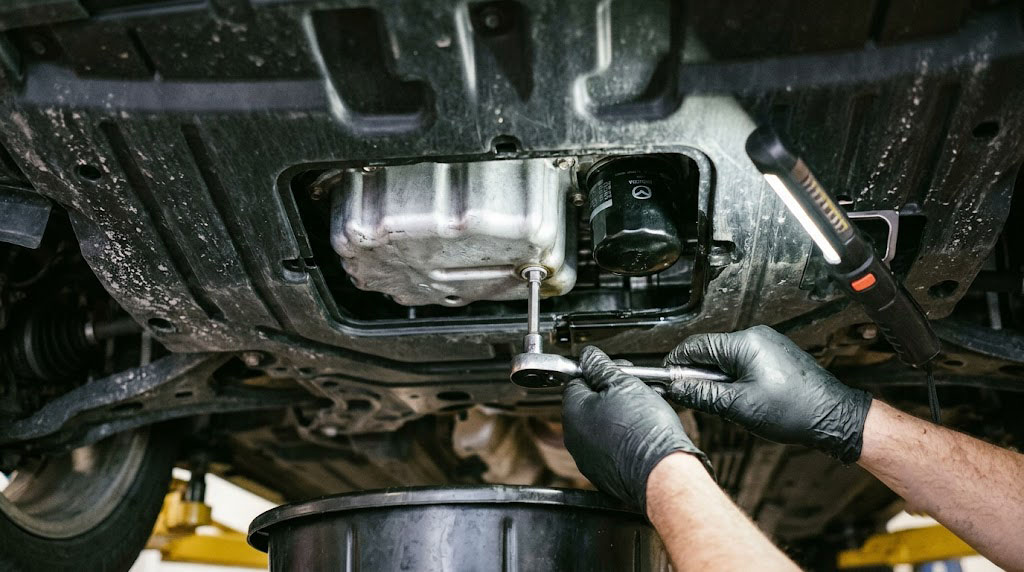
- Single-Use Aluminum Crush Washers: The CX-5 uses a cast aluminum oil pan. Reusing an old, flattened crush washer causes slow seepage and tempts technicians to overtighten the drain plug past the 30 lb-ft limit, which strips the soft aluminum threads out of the oil pan. Always install a fresh crush washer (OEM #9956-41-400) at every oil change.
- The Deceptive Dipstick Reading: The flat metal dipstick on 2.0L and 2.5L engines is notoriously prone to picking up residual oil inside the dipstick guide tube. Pull the dipstick, wipe it completely clean, reinsert it fully for three seconds, and inspect both sides. Always read the lower of the two oil lines across the flat edge to determine your genuine crankcase fill level.
Dealership Overhead vs. Drive-Thru Quick-Lube Efficiency
When you pull onto a franchised Mazda dealership service drive, a standard full synthetic drain-and-fill service commonly totals between $115 and $155. Much of that total subsidizes dealership facility overhead, customer lounge amenities, and commissioned service advisor upsell quotas.
Specialized express drive-thru facilities (such as Valvoline Instant Oil Change, Take 5, and Firestone) perform an identical service utilizing API SP / ILSAC GF-6A full synthetic oil for standard rates of $75 to $95. By planning ahead and pulling up active oil change coupons on your smartphone before the technician prints your intake ticket, you can instantly deduct $15 to $25 from your final invoice. That drops your out-the-door total down to approximately $55 to $70—cutting your scheduled Mazda CX-5 oil change cost roughly in half without compromising oil quality or factory warranty protection under the Magnuson-Moss Warranty Act.
Step-by-Step: Resetting the 2016 CX-5 Maintenance Due Monitor
The 2016 facelift moved service monitoring away from instrument cluster odometer buttons directly into the Mazda Connect infotainment screen. Once your fresh oil is filled and verified on the dipstick, clear the maintenance wrench warning using the central commander dial:
- Without depressing the brake pedal, press the Push Start button twice to cycle the vehicle into the "Ignition ON" position (instrument cluster lights illuminate, engine remains off).
- Using the central commander knob on the center console, scroll to and select Applications on the 7-inch display.
- Navigate to Vehicle Status Monitor.
- Select the Maintenance submenu.
- Scroll down and select Oil Change.
- Select Reset and confirm your choice when prompted.
- Pro Maintenance Strategy: In the same menu under Setting, check your tracking mode. If set to "Flexible", switch it to Fixed: 5,000 miles (or 6 months). A fixed 5,000-mile schedule provides a reliable safety margin against fuel dilution, ensuring that direct-injection soot never accumulates to the point of compromising timing chains or piston rings.
By pairing strict adherence to API SP full synthetic standards with a disciplined seasonal schedule, avoiding common service bay pitfalls, and taking advantage of digital quick-lube promotions, you ensure your 2016 Mazda CX-5 delivers dependable, quiet performance for hundreds of thousands of miles.