
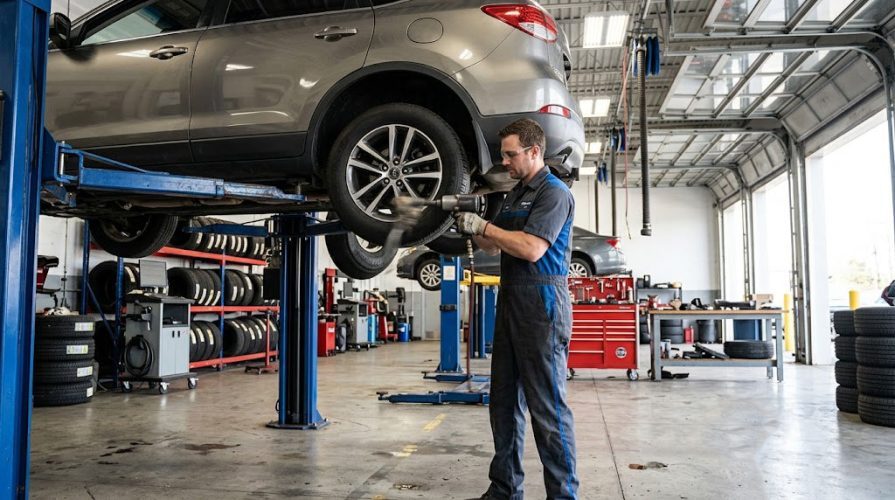
A professional tire rotation typically takes between 15 and 30 minutes at a dedicated automotive service center, or 10 to 15 additional minutes when performed alongside a routine oil change. If your service package also includes computer dynamic wheel balancing for all four wheels, expect the total turnaround time to take approximately 30 to 45 minutes. Conversely, rotating tires at home in your driveway using a manual floor jack and jack stands generally takes 45 to 60 minutes from start to clean-up.
At OilChangeHack, our garage technicians analyze routine pit-stop procedures, wheel-service tooling, and multi-point package inspections. Below is an exhaustive breakdown of how long tire rotations take across different service bays, the difference between rotating and balancing, and how pairing this service with an oil change saves both time and labor fees.

How Long Does It Take to Rotate Tires? Time by Facility
Turnaround times vary widely depending on the workshop's equipment and whether your vehicle is on a four-post commercial lift or basic floor jacks:
| Service Facility & Format | Rotation Only | Rotation + Balancing | Wait Time & Workflow |
|---|---|---|---|
| Express Quick Lube / Tire Shop | 15 – 20 Minutes | 30 – 40 Minutes | Commercial lifts with pneumatic air guns; rapid drive-thru turnaround |
| Paired With Oil Change Service | +10 – 15 Minutes | +25 – 35 Minutes | Wheels are rotated while engine oil drains from the crankcase sump |
| Independent Auto Repair Garage | 20 – 35 Minutes | 40 – 50 Minutes | Mechanic often performs complimentary brake and suspension visual checks |
| Dealership Service Department | 45 – 60 Minutes | 60 – 90 Minutes | Dropped off; queue delay depends on general service bay workload |
| DIY Driveway Tire Rotation | 45 – 60 Minutes | N/A (Shop required) | Requires two jacks or four rated safety stands, hand torque wrench |
Bundle Your Tire Rotation With Fresh Engine Oil
Avoid paying separate diagnostic labor fees for wheel maintenance. Maximize shop efficiency and redeem a verified coupon for $24.99 Synthetic Blend or $49.99 Full Synthetic Oil Change with Tire Rotation before visiting your nearest service garage.
What Happens During a Professional Tire Rotation?
When an automotive technician lifts your car for a standard rotation, they execute a precise mechanical sequence:
- Vehicle Elevation & Lug Removal (Minutes 0 – 5): The vehicle is positioned on an above-ground hydraulic frame lift. Technicians break torque on all 16 to 24 lug nuts using high-torque cordless or pneumatic impact guns and unmount all four wheels.
- Tire Pattern Matching (Minutes 5 – 10): Depending on your drivetrain (front-wheel drive, rear-wheel drive, or all-wheel drive) and whether the rubber is directional, technicians swap front wheels straight back to the rear or perform a forward-cross / X-pattern to equalize shoulder tread wear.
- Brake & Suspension Visual Inspection (Minutes 10 – 15): With the bare brake assemblies exposed, technicians check brake pad thickness, rotor grooving, tie-rod boots, and hydraulic brake lines for leaks.
- Hand Torquing to Factory Specification (Minutes 15 – 20): After remounting, technicians lower the vehicle to wheel-touch height and use a calibrated click-type torque wrench in a star pattern (typically 80 to 140 lb-ft) to prevent warped brake rotors. Cold tire inflation is verified to OEM door-placard PSI ratings.
How Often Should Tires Be Rotated and Balanced?
Industry standards, tire manufacturers (like Michelin and Goodyear), and automaker warranties universally recommend rotating tires every 5,000 to 7,500 miles. Because this interval matches standard synthetic blend and full synthetic oil change intervals, scheduling both services at the same appointment minimizes downtime.
Tire Rotation vs. Tire Balancing: What Is the Difference?
While frequently confused, rotations and balancing address completely different wear factors:
- Tire Rotation: Moves wheels to different positions on the chassis to balance uneven diagonal, edge, and steering wear patterns. Does not alter wheel weight distribution.
- Tire Balancing: Requires dismounting the wheel and placing it on a high-speed dynamic computer balancer. The machine spins the assembly to detect microscopic weight discrepancies and instructs the technician to clip or stick small lead/zinc counterweights (usually 0.25 to 1.5 ounces) to the rim. Balancing is recommended every 10,000 to 12,000 miles or immediately if steering wheel vibration appears at 55 to 70 MPH.
Why DIY Tire Rotations Take Longer at Home
Rotating your tires in a home driveway is straightforward, but it requires significantly more physical effort than shop visits:
- Lifting All Four Corners: Unless you own commercial hydraulic lifts, rotating non-directional tires requires raising both axles simultaneously using four heavy-duty jack stands placed under structural pinch welds.
- Manual Torquing: Breaking stubborn lug nuts by hand with a breaker bar and manually torquing 20 lug nuts back down adds 15 to 20 minutes of physical labor.
- Inability to Balance at Home: Driveway maintenance cannot diagnose dynamic weight imbalances or unseated rim bead runout, which require commercial electronic spin-balancing machines.
3 Tips to Speed Up Your Next Tire Rotation Visit
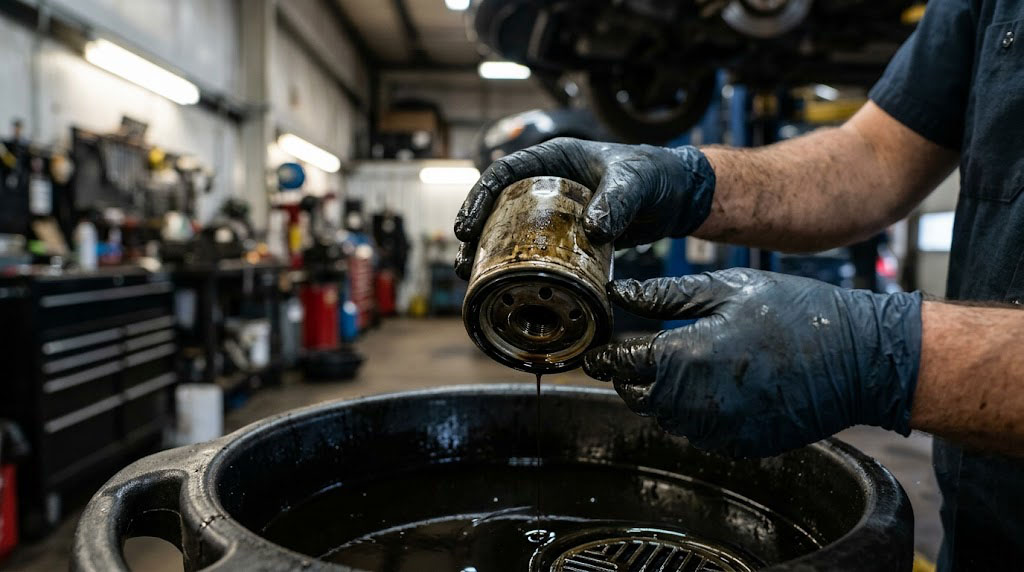
- Always Book Wheel Rotation With Your Oil Service: Express technicians execute both operations simultaneously. While the warm engine oil drains into the collection tank, the technician pulls the wheels, saving at least 15 minutes of dedicated lift setup time.
- Check Wheel Lock Keys in Advance: If your vehicle uses anti-theft locking wheel lugs, place the specialty socket adapter in your center console before handing keys to the service advisor to prevent bay delays.
- Inspect Tread Depth Monthly: Uneven tire wear caught early can be corrected with a simple 15-minute cross-rotation before cupping requires costly four-wheel suspension alignment.