

You pull into the service bay hoping to cash in on a cheap oil change coupon, but the moment you hand over your keys, the technician glances at the odometer and pauses. "Your vehicle is well past 75,000 miles," he explains with urgent concern. "Standard lube won't protect those aged internal seals anymore. You really need our premium high mileage oil change package today."
Within seconds, an affordable trip to the bay turns into an expensive invoice. Drivers across the country face this exact scenario every day, leaving many to wonder: is upgrading to high-mileage fluid genuinely worth the steep price bump, or is it merely a well-rehearsed franchise sales tactic? Before you pay extra or hunt for random discounts, let's unpack the actual mechanical science behind these formulations and explore how to score the best deals without sacrificing engine longevity.
What Actually Separates High-Mileage Formulations from Standard Motor Oil?
Formulas created for older engines are not snake oil, but their everyday benefits are often exaggerated. Under the label, manufacturers blend standard base stocks with a dedicated chemical package tailored to address aging mechanical wear. The foundation relies on three key ingredients:
- Seal Swell Conditioners: Extreme heat cycles cause rubber gaskets, crankshaft seals, and valve covers to dry out, harden, and contract. Conditioners soak into brittle elastomers, restoring flexibility and causing them to expand slightly to seal micro-fissures.
- Elevated Anti-Wear Chemistry: Aging powertrains benefit from enhanced zinc and phosphorus (ZDDP) friction buffers to guard critical metal contact points under heavy mechanical stress.
- Heavy-Duty Detergents: Older engines naturally accumulate crankcase varnish. Stronger detergency suspends legacy carbon deposits until the next routine fluid drain.
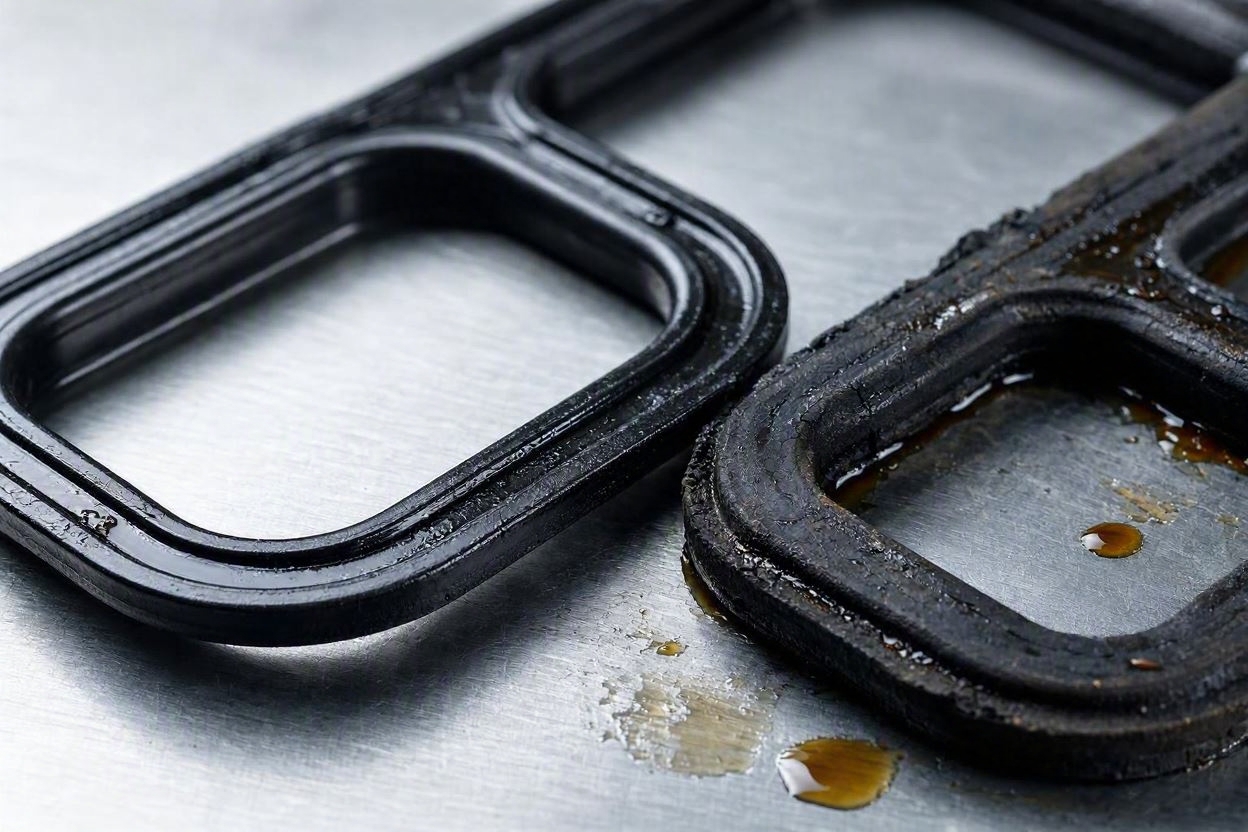
The 75,000-Mile Myth: When Do You Truly Need It?
The automotive industry universally promotes 75,000 miles as the dividing line where engines suddenly require specialized fluid. However, modern manufacturing tolerances and robust synthetic chemistry have largely rendered that milestone arbitrary. An engine driven primarily on highways might reach 130,000 miles with spotless gaskets, while an inner-city delivery vehicle could show wear much sooner.
If your dipstick shows steady levels between scheduled maintenance visits and your driveway remains free of oily stains, you do not need to pay extra for high mileage oil. In fact, a premium full synthetic oil change provides vastly superior thermal protection, better flow on cold mornings, and superior sludge prevention compared to an entry-level high-mileage blend.
The "Synthetic Blend" Pricing Loophole
When quick-lube chains such as Jiffy Lube recommend an age-related upgrade, they routinely offer a "Synthetic Blend." What drivers often overlook is that industry standards do not mandate a minimum percentage of true synthetic stock to earn that classification. A blend might contain only 15% synthetic stock alongside standard mineral oil, yet service centers frequently tack on an extra $20 to $30 at checkout.
Instead of falling for mid-tier compromises, smart drivers look for verified drive-thru promotions. Securing a digital barcode voucher allows you to upgrade directly to genuine full synthetic while paying less than the baseline store price.
Save on High-Mileage & Full Synthetic Maintenance
Never pay standard menu board prices for specialized seal-protecting lubricants. Unlock an active valvoline coupon $25 synthetic oil change directly from your smartphone before the technician drafts your work order.

When Is the Upgrade Genuinely Necessary?
You should actively switch to an age-targeted formula or schedule a mechanical diagnostic if your vehicle exhibits tangible wear symptoms:
- Persistent Seepage: You see wet grease trails coating the bottom of the oil pan or spot stains on the pavement after parking overnight.
- Unexplained Fluid Loss: Your dipstick drops by a full quart every 1,500 to 2,500 miles despite no obvious puddles on the ground.
- Cold-Start Tailpipe Smoke: A puff of blue exhaust on startup suggests worn valve stem seals are letting fluid drip directly into combustion chambers while parked.
Bear in mind that chemical conditioners cannot mend a torn gasket or cracked casting. If a rear main seal has physically failed, pouring in additive-rich fluid will not stop the leak. In those cases, having certified technicians at full-service facilities like Firestone Complete Auto Care or Midas inspect and replace the failing hardware is the only reliable cure.
Compare Deals Across Nationwide Service Centers
Review regional rates and dodge counter markups by exploring verified oil change coupon specials across all major automotive repair chains.
Browse Verified OffersHow to Secure the Best Oil Change Deals on High-Mileage Care
If your powertrain legitimately requires seal conditioners and extra zinc buffers, never pay retail rack rates. Because high-mileage packages carry generous profit margins, service chains routinely issue competitive incentives to attract routine drivers.
For example, Valvoline engineered the high-mileage category with their proprietary MaxLife™ formulation. Before pulling into a local bay, check for a verified valvoline oil change coupon 50 percent off or look for seasonal dollar-off promotions to shave $15 to $25 off your final ticket. Pairing an authentic digital discount with routine inspection gives your aging engine premium defense without stretching your budget.