
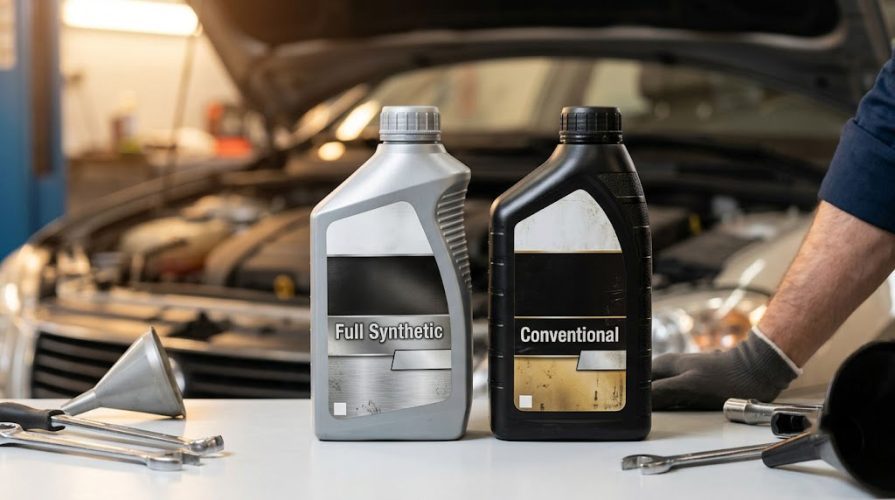
Yes, you can safely mix synthetic and conventional motor oil in your engine. The widespread belief that you can't mix conventional and synthetic oils is a myth. Every modern lubricant bearing the American Petroleum Institute (API) "Donut" or "Starburst" certification is engineered with chemically compatible base stocks and detergent additives. Blending them will never cause fluid curdling, internal sludge clogs, or catastrophic engine failure. In reality, pouring synthetic into conventional oil simply creates a homemade synthetic blend.
However, while mixing motor oils is mechanically harmless during emergency top-offs, it directly compromises the extended protection of premium lubricants. At OilChangeHack, our certified automotive editors break down the science behind oil compatibility, separate truth from myth, and reveal how mixing affects your maintenance schedule.

You Can't Mix Conventional and Synthetic Oils: Fact or Myth?
For decades, backyard mechanics repeated the warning: you can't mix conventional and synthetic oils. When synthetic lubricants first debuted in the 1970s, early formulations utilized aggressive ester base stocks that occasionally degraded vintage nitrile rubber engine gaskets. Modern engineering solved this decades ago.
Today, the notion that you can't mix conventional and synthetic oils fact myth debate is entirely settled by SAE and API manufacturing standards:
| Lubrication Metric | 100% Full Synthetic | Conventional & Synthetic Blend | 100% Conventional |
|---|---|---|---|
| Extreme Heat Breakdown | Resists oxidation past 400°F | Moderate (weakened by mineral base) | Breaks down rapidly over 250°F |
| Sub-Zero Pumping Flow | Instant flow down to -35°F | Sluggish cold-weather cranking | Thickens significantly in freezing air |
| Safe Drain Interval | 7,500 – 10,000 miles | 3,000 – 5,000 miles maximum | 3,000 – 5,000 miles |
| Engine Sludge Protection | Maximum detergent power | Diluted additive balance | Prone to carbon varnish build-up |
| Emergency Safety Risk | Zero mechanical risk | Zero mechanical risk | Zero mechanical risk |
What Happens If You Mix Synthetic and Conventional Oil?
When you ask whether can you mix conventional and synthetic oil, the primary consequence isn't mechanical destruction—it is degraded performance:
- Diluted Molecular Uniformity: Full synthetic motor oil features uniform, engineered molecules that glide past one another with minimal friction. Mineral oil contains irregular hydrocarbon molecules with wax impurities. Mixing them immediately eliminates the friction-reducing benefits of full synthetic.
- Reduced Viscosity Index Stability: Conventional oil relies heavily on chemical viscosity index improvers that shear down under turbocharger heat. Adding conventional oil to a synthetic crankcase reduces overall resistance to thermal thinning.
- Compromised Drain Intervals: A batch of mixed motor oil is only as durable as its weakest ingredient. If you top off a 10,000-mile synthetic oil with two quarts of conventional oil, you must service the entire crankcase within 3,000 to 5,000 miles. When you are ready to drain the diluted fluid and restore pure factory lubrication, using a verified firestone full synthetic oil change coupon $25 off saves you money on premium Pennzoil fluid at your local bay.
Can You Mix Synthetic Blend With Full Synthetic?
Yes. Commercial synthetic blend is simply a factory-bottled mixture of refined mineral oil and synthetic base stocks. Pouring full synthetic into synthetic blend simply enriches the synthetic concentration, improving thermal resistance. Doing the reverse is also safe, though it slightly dilutes pure synthetic performance.
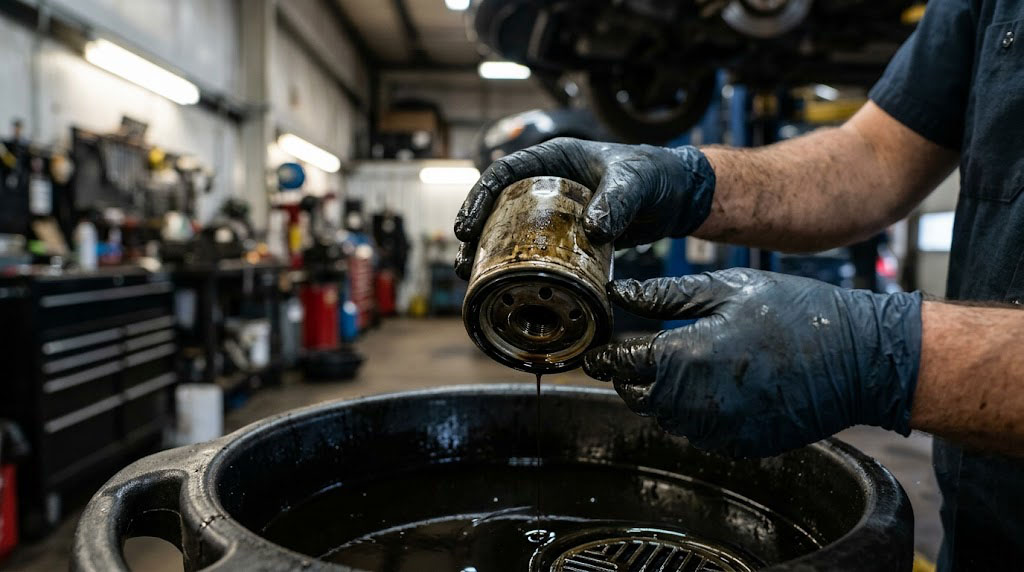
3 Essential Rules for Emergency Oil Top-Offs
If your low oil pressure light flashes or your dipstick shows a dangerously low fluid level on a road trip, remember these operational rules:
- Match Viscosity Before Base Stock: Pouring in conventional 5W-30 is far safer for your engine bearings and variable valve timing solenoids than adding a full synthetic 15W-40 that is too thick for oil passages.
- Never Drive With Low Oil to Avoid Mixing: Running an engine two quarts low causes oil starvation, extreme bearing heat, and catastrophic camshaft failure. Any clean motor oil is infinitely better than insufficient oil volume.
- Schedule an Early Oil Change: Use mixed oil as a temporary bridge to get you home or to your destination, then schedule a fresh drain-and-fill to reset your baseline.
Can You Switch Between Synthetic and Regular Oil?
Yes. You can switch from conventional to synthetic—or from synthetic back to conventional—at any scheduled service interval without flushing additives. However, if your owner's manual mandates synthetic oil (such as 0W-20 or Dexos1 specifications), switching down to conventional oil voids powertrain warranties and risks turbocharger bearing carbonization.